Key Takeaways
- 01
Chatbots provide real-time shipment tracking and instant order updates automatically. - 02
They automate procurement, warehousing, and inventory forecasting with greater accuracy. - 03
24/7 availability reduces delays and keeps supply chain communication seamless. - 04
Chatbots lower operational costs by reducing manual work and human errors. - 05
End-to-end visibility helps businesses identify and resolve supply chain issues faster.
Have you ever wondered how chatbots could transform the way your supply chain operates? Imagine a world where communication is instant, processes run smoothly, and decisions are made faster with the help of AI-powered assistants.
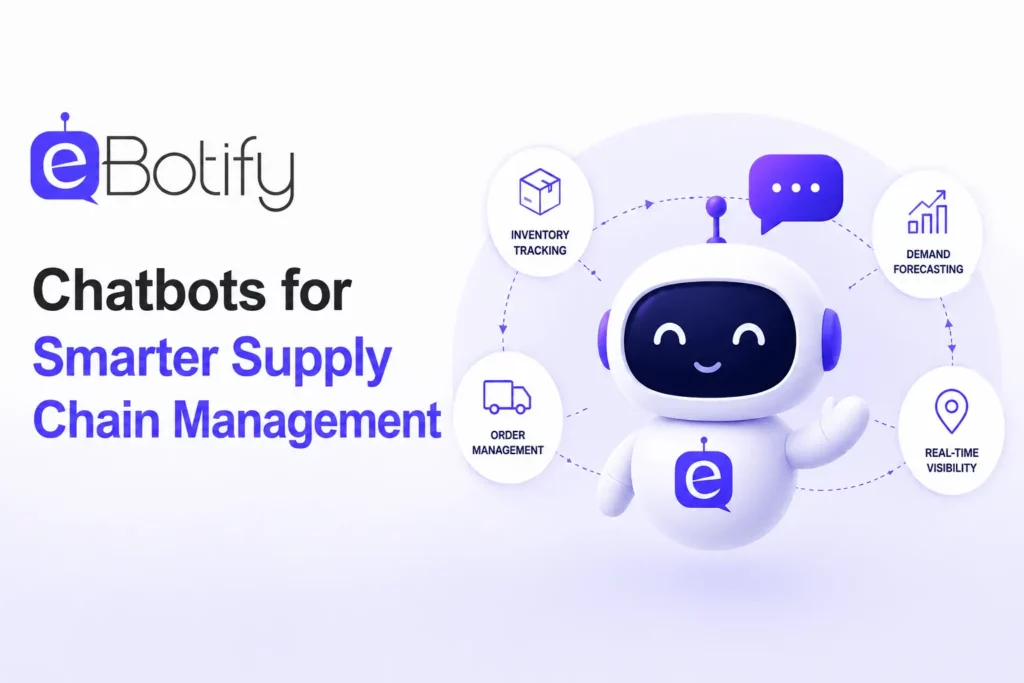
Chatbots are revolutionizing supply chain management by automating tasks such as inventory tracking, order monitoring, supplier communication, and customer support. By providing real-time insights and seamless coordination across the supply chain, they help businesses reduce delays, improve efficiency, lower costs, and stay competitive in a rapidly changing market. In this blog, we’ll explore how chatbots are reshaping supply chain operations and driving smarter business outcomes.
Overview of Chatbots in Supply Chain
Chatbots in supply chain management are AI-powered tools that help automate communication and operational tasks. They support real-time tracking, order updates, and inventory management by interacting with data systems and users. These chatbots improve efficiency by reducing manual effort and speeding up decision-making across supply chain processes.
They are widely used to connect suppliers, warehouses, and logistics teams through instant communication. Chatbots also provide alerts, insights, and status updates to ensure smooth operations. By integrating with ERP and supply chain platforms, they help businesses improve accuracy, reduce delays, and enhance overall visibility in the supply chain ecosystem.
Role of Chatbot in Smarter Supply Chain Management
Chatbots are becoming an important part of smarter supply chain management. They help automate routine tasks, improve communication, and provide real-time updates across operations. With AI support, they make supply chains faster, more efficient, and easier to manage.
1. Shipment Tracking
Chatbots provide real-time shipment updates to customers and businesses using tracking numbers. They instantly share location details, delivery time, and delay alerts without needing customer support. This improves transparency and reduces communication gaps in logistics.
2. Order Management
Chatbots help users place orders, track status, and manage cancellations quickly. They also send real-time updates from order processing to delivery. This reduces delays and improves communication between customers and supply chain teams.
3. Customer Service
Chatbots offer 24/7 support for order queries, returns, and shipping updates. They respond instantly and escalate complex issues to human agents when needed. This reduces workload on support teams and improves customer satisfaction.
4. Procurement Support
Chatbots simplify procurement by helping with vendor communication, quotation requests, and purchase orders. They also track deliveries, manage invoices, and ensure timely payments. This improves transparency and reduces manual errors in procurement processes.
5. Warehouse Management
Chatbots assist in monitoring inventory levels, tracking shipments, and managing storage in real time. They provide alerts for low stock and help optimize warehouse space. This improves accuracy and reduces operational delays.
6. Inventory Forecasting
Chatbots analyze past data and demand patterns to predict future inventory needs. This helps businesses avoid overstocking or stock shortages and improves supply chain planning efficiency.
7. Logistics Optimization
Chatbots help optimize delivery routes and schedules using real-time data. This reduces transportation costs, improves delivery speed, and ensures better resource utilization across the supply chain.
8. Supplier Coordination
Chatbots improve communication with suppliers by sending instant updates and reminders. They help manage contracts, delivery timelines, and issue resolution efficiently, ensuring smooth collaboration.
Benefits of Using Chatbots in Supply Chain Management
Chatbots bring speed, automation, and accuracy to supply chain operations by reducing manual work and improving communication. They help businesses respond faster, manage resources better, and deliver improved customer experiences across the supply chain.
1. Faster Communication
Chatbots enable instant communication between suppliers, logistics teams, and customers. This reduces delays in information sharing and helps businesses make quicker decisions.
2. Improved Efficiency
By automating repetitive tasks like tracking, updates, and order handling, chatbots improve overall operational efficiency. This allows teams to focus on more strategic activities.
3. Cost Reduction
Chatbots reduce the need for large customer support and manual monitoring teams. This helps businesses lower operational costs while maintaining high service quality.
4. Real-Time Insights
They provide real-time data on inventory, shipments, and orders. These insights help businesses make informed decisions and avoid disruptions in the supply chain.
5. Better Customer Experience
Chatbots offer 24/7 support and instant responses to queries. This improves customer satisfaction by providing quick and accurate information at any time.
6. Reduced Human Errors
Automation minimizes mistakes in order processing, tracking, and data entry. This leads to more accurate operations and smoother supply chain workflows.
7. Scalability
Chatbots can handle a large volume of queries and transactions simultaneously. This makes it easier for businesses to scale operations without increasing workload significantly.
8. Enhanced Supply Chain Visibility
They provide end-to-end visibility across the supply chain network. This helps businesses track performance and identify issues quickly for faster resolution.
Drawbacks At a Glance
1. Integration Challenges
Legacy systems block real-time data access for chatbots.
2. Hallucinations and Inaccuracies
AI may generate incorrect logistics or shipment information.
3. Complexity Limitations
Struggles with multi-layered and dynamic supply chain issues.
4. Security and Privacy Risks
Handling sensitive data increases breach and compliance risks.
5. Impersonal Experience
Lacks empathy during delays or critical customer issues.
Want to Build a Smarter Supply Chain with AI Chatbots?
Chatbots are revolutionizing supply chain management by automating essential tasks, boosting communication, and increasing efficiency. From real-time shipment monitoring to order administration, procurement support, and warehouse operations, chatbots provide a smooth and responsive supply chain. Businesses can streamline their operations, decrease expenses, and remain competitive in today’s fast-paced market by decreasing delays, minimizing human mistakes, and providing 24/7 customer assistance.
eBotify is a cutting-edge AI chatbot solution designed to revolutionize supply chain management. With its intelligent automation, real-time data insights, and seamless communication features, eBotify helps businesses optimize their logistics, enhance customer support, and streamline operations. Whether you’re managing orders, tracking shipments, or coordinating with suppliers, eBotify ensures accuracy, efficiency, and reliability at every step. By leveraging advanced AI, eBotify empowers businesses to create a smarter, faster, and more efficient supply chain, driving growth and customer satisfaction.
Frequently Asked Questions
1. How do chatbots for supply chain managementactually handleunexpected disruptions like delays or supplier failures?
They flag anomalies in real time, send immediate alerts to relevant teams, and provide status updates to customers automatically. While they cannot resolve the root cause, they significantly reduce the communication lag that usually makes disruptions far more damaging than they need to be.
2. Do supply chain chatbots require a complete overhaul of existing systems before they can be implemented?
Not necessarily. Most modern chatbots are designed to integrate with existing ERP and supply chain platforms. The complexity depends on how outdated the current infrastructure is. A phased integration approach works well for businesses that cannot afford significant downtime during the transition period.
3. How reliable is the data that chatbots pull when giving shipment or inventory updates to customers and teams?
Reliability depends entirely on the quality of the connected data sources. When integrated properly with live systems, chatbot updates are accurate and timely. The risk of inaccurate information increases when the underlying data is fragmented, outdated, or poorly maintained across different platforms.
4. Can chatbots genuinely handle supplier communication, or do suppliers still prefer dealing with actual people?
Chatbots handle routine communication well, things like delivery reminders, order confirmations, and invoice follow-ups. For relationship-driven conversations or dispute resolution, human involvement still tends to produce better outcomes. The smartest setups use chatbots for volume and people for nuance.
5. What kind of businesses benefit most from adding chatbots to their supply chain operations right now?
Businesses managing high order volumes, multiple suppliers, or cross-border logistics see the fastest returns. The more moving parts involved, the more value automation delivers. Even mid-sized operations with lean teams can benefit significantly by reducing the manual coordination that typically slows everything down.