Key Takeaways
- 01
Healthcare chatbots provide faster access to information, support, and everyday healthcare services. - 02
They simplify appointments, reminders, billing queries, and routine patient communication across healthcare settings. - 03
Chatbots help patients manage medications, chronic conditions, recovery, and ongoing care needs. - 04
Healthcare teams gain more time for patients by automating repetitive administrative tasks. - 05
Safe chatbot deployment requires strong privacy, accuracy, integration, and human oversight practices.
Healthcare organizations now seek better ways to connect with patients across digital channels. A healthcare chatbot delivers quick answers, appointment support, and personalized guidance whenever patients need help. It improves communication, reduces waiting time, and helps care teams manage routine requests efficiently. Patients also gain easier access to reliable healthcare information.
Artificial intelligence now helps providers create faster, more responsive, and patient-focused healthcare experiences. These tools support engagement before, during, and after medical visits through timely conversations. They also help teams improve service quality while keeping patients informed. In this blog, we will explore how AI transforms patient engagement.
What is a Healthcare Chatbot?
A healthcare chatbot is an AI-powered tool that communicates with patients, caregivers, and medical staff through text or voice. It understands health-related questions, shares useful information, supports appointment booking, and helps people access healthcare services quickly at any time.
Healthcare chatbots can be rule-based or AI-powered. Rule-based chatbots follow fixed steps for simple tasks, such as answering FAQs. AI-powered chatbots understand context, guide symptom checks, support triage, and offer personalized health education based on patient needs.
Role of a Healthcare Chatbot
1. Symptom triage: Guides users toward appropriate care based on symptoms.
2. Appointment support: Books, cancels, and reminds patients about upcoming visits.
3. Insurance assistance: Answers coverage questions and supports insurance verification processes.
4. Medication management: Sends reminders and tracks prescription refill schedules accurately.
5. Patient education: Shares clear guidance about conditions, prevention, and care instructions.
6. Post-treatment follow-up: Checks recovery progress and flags concerns for care teams.
7. Mental health support: Provides coping exercises, mood tracking, and stress guidance.
8. Clinical documentation: Helps create visit summaries, discharge notes, and referral letters.
9. Workflow automation: A medical chatbot handles routine requests and reduces staff workload.
Why are Healthcare Chatbots Important for Patient Engagement?
Healthcare chatbots improve patient engagement by offering quick, convenient, and personalized support. The following are the key reasons they matter for better patient experiences.
1. 24/7 Access to Support
Patients can find answers to common health, billing, and insurance questions at any time. This saves them from waiting on hold when they need simple information quickly.
2. Easier Appointment Management
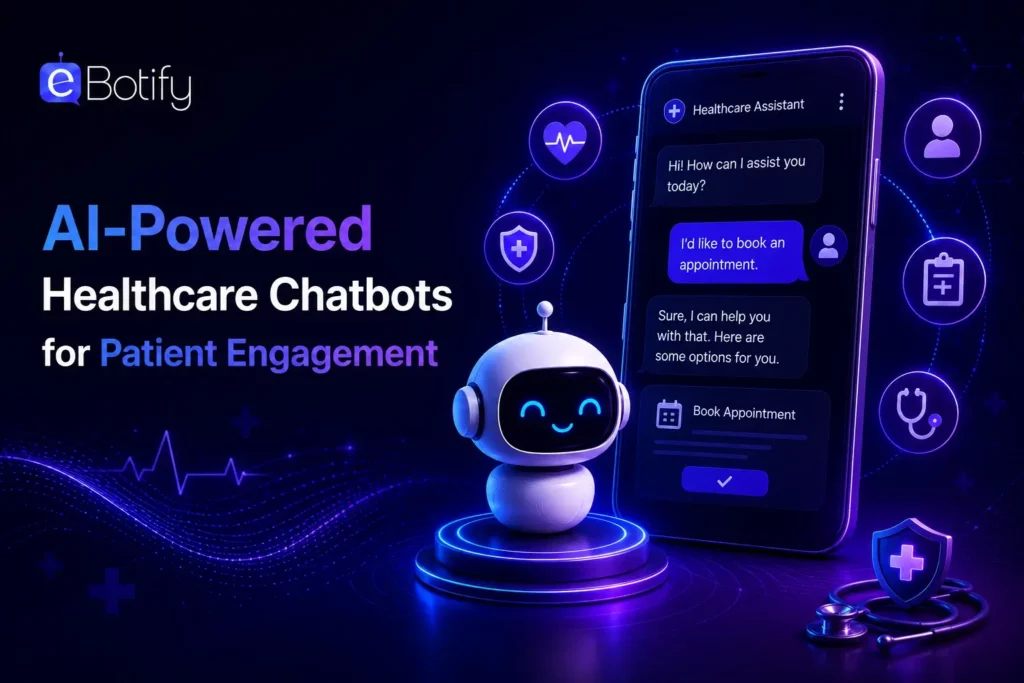
Patients can book, reschedule, or cancel appointments without calling the front desk. A hospital AI chatbot makes these routine steps faster and more convenient for everyone.
3. Timely Care Reminders
Helpful reminders encourage patients to take medicines, attend visits, and follow care instructions. These small prompts can make it easier for patients to stay on track.
4. Early Symptom Guidance
Patients can share their symptoms and receive guidance on the next suitable step. The chatbot can direct them toward home care, a clinic visit, urgent care, or emergency support.
5. Personalized Ongoing Support
Patients managing long-term conditions can receive useful guidance based on their care needs. They can also track symptoms and share updates that help care teams understand their progress.
6. More Time for Meaningful Care
Chatbots handle simple requests that often take up staff time during busy days. This allows healthcare teams to focus more attention on patients who need personal support.
Common Use Cases of Healthcare Chatbots in Healthcare
Healthcare chatbots support many everyday needs across modern healthcare settings. The following are the common use cases of healthcare automation that improve patient and provider experiences.
1. Appointment Scheduling and Management
Patients can book, reschedule, or cancel appointments without calling the front desk. They also receive reminders and preparation details before their visit.
2. Patient Education and Information
Chatbots answer common questions about services, locations, visiting hours, and treatments. Clear information helps patients feel prepared and less anxious about their care.
3. Medication and Chronic Disease Management
Patients receive reminders to take medicines and refill prescriptions on time. Ongoing support also helps them manage long-term conditions more confidently.
4. Billing and Insurance Queries
Patients can get help with bills, insurance coverage, and expected medical costs. This makes financial information easier to understand without long phone waits.
5. Symptom Assessment and Triage
Patients can describe their symptoms and receive guidance on what to do next. The chatbot helps them understand whether they need home care, a clinic, or urgent support.
6. Post-Discharge Follow-Up
Patients receive check-ins after treatment to share how they are recovering. These conversations can highlight concerns and remind them about follow-up care.
7. Mental Health Support
Patients can access simple wellness exercises and emotional support whenever they need it. This creates a private space to manage stress, anxiety, and daily challenges.
Challenges Healthcare Organizations Face When Using AI Chatbots
1. Data privacy risks: Medical chatbots must protect sensitive patient information from unauthorized access.
2. Incorrect health information: Wrong answers can mislead patients and create serious safety concerns.
3. Algorithmic bias: Unbalanced training data may produce unfair guidance for some patient groups.
4. Over-reliance on chatbots: Staff may trust chatbot responses without applying proper clinical judgment.
5. System integration issues: Connecting chatbots with EHR systems requires complex technical planning.
6. Limited human empathy: Chatbots cannot provide genuine comfort during sensitive patient conversations.
Ready to Improve Patient Engagement With Smarter Conversations?
Healthcare chatbots help organizations deliver timely information, simplify routine tasks, and keep patients connected throughout their care journey. A patient support chatbot can strengthen communication while allowing care teams to spend more time on meaningful patient needs.
eBotify helps businesses create humanized conversational bots that engage audiences and guide customers through meaningful interactions. You can build your own chatbot to answer questions, support customers, encourage action, and create better conversations that support long-term business growth.
Frequently Asked Questions
1. Can healthcare chatbots replace doctors or nurses?
No, chatbots support care teams by handling simple questions and routine tasks. Doctors and nurses remain responsible for diagnosis, treatment, and complex patient decisions.
2. How can patients know when to speak with a real person?
A good chatbot should clearly offer human support when questions become complex or urgent. It should also guide patients to emergency services when immediate care is needed.
3. How long does it take to launch a healthcare chatbot?
The timeline depends on the chatbot’s features, integrations, and healthcare workflows. A simple chatbot can launch sooner, while a customized solution may need more planning and testing.
4. Can a healthcare chatbot work in more than one language?
Yes, many chatbots can support multiple languages to make healthcare information easier to access. Organizations should still review translations to ensure the guidance remains clear and accurate.
5. How do healthcare organizations measure chatbot success?
They can track response time, patient satisfaction, appointment completion, and reduced staff workload. These results show whether the chatbot improves patient access and everyday service delivery.