Key Takeaways
- 01
Customer service chatbots make support faster, smarter, and always available. - 02
Chatbots reduce operational costs without compromising on service quality. - 03
They handle repetitive tasks, so human agents focus on complex issues. - 04
Businesses across industries use chatbots to improve customer experience. - 05
Choosing the right chatbot platform makes deployment simple and effective.
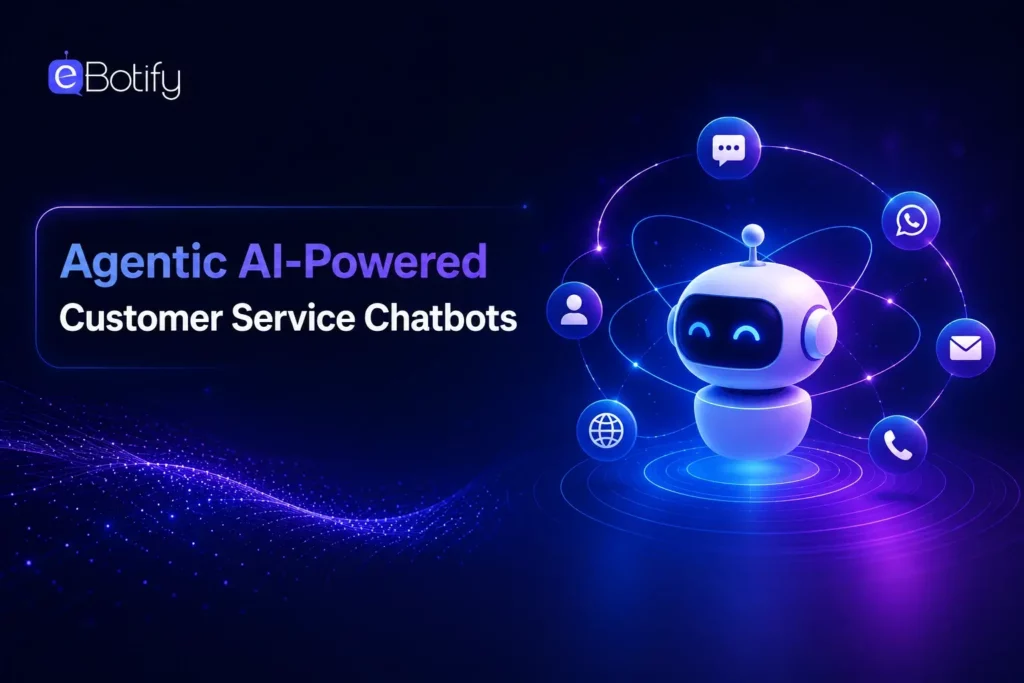
Customer service chatbots are changing how businesses handle support, and the shift is bigger than most people realize. Companies now use AI-powered systems to answer questions, resolve issues, and guide customers through complex processes without any human involvement. This makes support faster, smarter, and available around the clock.
Agentic AI takes this a step further by giving chatbots the ability to think, decide, and act on their own. These systems do not just respond to questions. They complete tasks, remember context, and improve over time through real interactions. In this blog, we explore the core benefits and real-world use cases of agentic AI-powered customer service chatbots transforming businesses today. So, let us keep reading further!
What is a Customer Service Chatbot?
A customer service chatbot is an AI program built to simulate human conversation and resolve user queries without human intervention. These tools work 24/7 across websites, mobile apps, and social media platforms. They use pre-programmed rules or machine learning to answer questions, track orders, and fix basic issues instantly.
This AI chatbot for businesses uses Natural Language Processing to understand the intent behind every customer’s message. This allows it to deliver personalized responses instead of rigid scripted replies. When a problem becomes too complex, the chatbot transfers the conversation to a live agent. This reduces wait times and cuts operational costs significantly.
Key Capabilities At a Glance
1. Order and Account Management: Tracks orders, resets passwords, and manages subscriptions automatically.
2. Appointment Booking and Reminders: Schedules, confirms, and reschedules appointments through conversational interfaces.
3. Returns and Refund Processing: Initiates returns, checks eligibility, and sends confirmations automatically.
4. Proactive Customer Outreach: Sends follow-ups, renewal prompts, and reminders via messaging channels.
5. Complaint Logging and Routing: Captures complaints and escalates complex cases to human agents.
6. Self-Service Account Access: Lets customers manage accounts without waiting for agent support.
7. 24/7 FAQs Support: Answers common questions instantly without any agent involvement.
What are the Benefits of Customer Service Chatbots?
Did you know? A report from Gartner predicts that agentic AI will autonomously resolve 80% of common customer service issues by 2029, with a 30% reduction in operational costs. Customer service chatbots are driving this shift by making support faster, smarter, and more scalable. Here are the key benefits that make them a smart investment for businesses today.
1. Round-the-Clock Availability
Customers get support any time of day, without waiting. This 24/7 availability removes frustration and serves global audiences effortlessly.
2. Faster Response Times
An AI customer support system replies instantly, eliminating long wait times. Customers get accurate answers the moment they need them.
3. Higher Customer Satisfaction
Chatbots give precise answers and suggest helpful resources during every interaction. This creates a smoother experience that keeps customers coming back.
4. Reduced Agent Workload
Chatbots handle repetitive queries so agents can focus on complex issues. This reduces burnout and improves overall team productivity.
5. Smarter Self-Service Options
Customers solve problems independently without contacting a live agent. Chatbots guide them through steps clearly and efficiently every time.
6. Better Sales and Conversions
A chatbot for lead generation nurtures prospects around the clock and recommends products based on customer behavior and preferences. This drives higher cart values and more conversions.
7. Seamless Omnichannel Support
AI customer service connects across chat, email, and social platforms without losing conversation history. Customers never have to repeat themselves on any channel.
8. Stronger Net Promoter Scores
Consistent and accurate responses build customer trust and loyalty over time. Happy customers are far more likely to recommend your brand.
9. Actionable Conversation Insights
Every chatbot interaction records valuable insights about customer needs and behavior. Teams use this data to improve strategies and personalize future support.
10. Lower Operational Costs
Chatbots handle high volumes without increasing headcount or overhead costs. Businesses save significantly while maintaining strong service quality at scale.
Drawbacks to Look Out For
- Struggle with unique, complex, and technical customer issues.
- Cannot understand emotions or respond with genuine empathy.
- Repeat scripted answers when unable to understand queries.
- Often delay or complicate access to human agents.
- Need constant updates to maintain accurate information.
Practical Use Cases of Customer Service Chatbots
Here are some practical ways customer service chatbots are being used across businesses today. They help companies deliver faster support, improve customer satisfaction, and handle routine service tasks more efficiently.
1. E-Commerce & Retail
Customer service chatbots help shoppers find products, check availability, and get quick answers. They also support customer communication automation by handling returns and recommendations, though they may struggle with unusual customer issues.
2. Banking & Financial Services
Chatbots help customers check account information, report card issues, and receive fraud alerts at any time. However, they cannot provide detailed financial advice and must follow strict security requirements.
3. Healthcare
Healthcare chatbots assist with appointment scheduling, medication reminders, and basic health information. They cannot diagnose medical conditions and may miss important details in complex situations.
4. Travel & Hospitality
Travel chatbots help guests manage bookings, receive travel updates, and get local recommendations. However, they can face challenges when handling major disruptions or complicated travel changes.
5. Telecom
Telecom chatbots support customers with billing questions, plan upgrades, and simple troubleshooting. They may not be effective for advanced technical problems that require expert assistance.
6. Education
Educational chatbots answer common student questions, share course information, and provide learning support. However, they may struggle to address complex academic concerns or personalized guidance needs.
Must-Know Insights
- Chatbot market projected to reach $20.81 billion by 2029.
- Chatbots manage 30% of live chats and automate 80% tasks.
- Chatbots deliver answers 3x faster than traditional customer support.
- 1.5 billion people interacted with chatbots during the past year.
Ready to Transform Your Customer Service Experience?
Customer service chatbots are no longer optional. They cut costs, speed up support, and keep customers satisfied around the clock. Businesses that adopt the best ai chatbot for customer service today will stay ahead of those still relying on outdated support systems tomorrow.
eBotify makes it simple to build remarkably humanized chatbots that engage, convince, and support your customers with meaningful conversations. You do not need a development team. Build your own bot, your way, and start delivering smarter customer experiences from day one.
Frequently Asked Questions
1. How long does it take to set up a customer service chatbot?
Most platforms let you launch a basic chatbot within a few days. Complex integrations with backend systems may take a few weeks depending on your setup.
2. Can a chatbot work with my existing CRM or helpdesk tools?
Yes, most modern chatbots integrate with popular tools like Salesforce, Zendesk, and HubSpot. You just need to check API compatibility before getting started.
3. Will customers know they are talking to a bot?
Most customers can tell, especially during longer conversations. Being transparent about it actually builds more trust than trying to hide it.
4. Is a chatbot suitable for small businesses or just large enterprises?
Chatbots work well for businesses of any size. Small businesses benefit the most since they save on hiring additional support staff.
5. What happens to customer data collected by chatbots?
Data is stored and managed based on your platform’s privacy policy and compliance settings. Always ensure your chatbot provider follows GDPR or relevant data protection regulations.