Key Takeaways
- 01
AI chatbots engage B2B prospects instantly and help capture potential opportunities around the clock. - 02
Chatbots collect useful prospect information and help sales teams identify higher-intent leads. - 03
CRM integration keeps lead details and conversation history accessible to sales teams. - 04
Smart routing connects promising prospects with the appropriate sales representative at the right time. - 05
The right chatbot can reduce manual work while creating a smoother B2B buying experience.
A website visitor shows interest, starts a conversation, and then leaves before anyone from sales responds. For B2B companies, moments like this can mean missed opportunities. A lead qualification chatbot helps close that gap by engaging visitors instantly, asking relevant questions, understanding their needs, and identifying prospects with genuine buying intent.
B2B sales teams also need more than a steady flow of leads. They need clear information about who is ready to talk, what they need, and how soon they may buy. AI chatbots can collect this context and help sales teams focus their time where it matters. In this blog, we will explore how AI chatbots support B2B lead qualification, their key features, use cases, benefits, and selection factors.
What is a Lead Qualification Chatbot?
A lead qualification chatbot is an AI-powered chatbot that interacts with website visitors and determines whether they are a good fit for a business. Instead of simply collecting contact details, it asks relevant questions about the visitor’s company, needs, budget, goals, and purchase timeline.
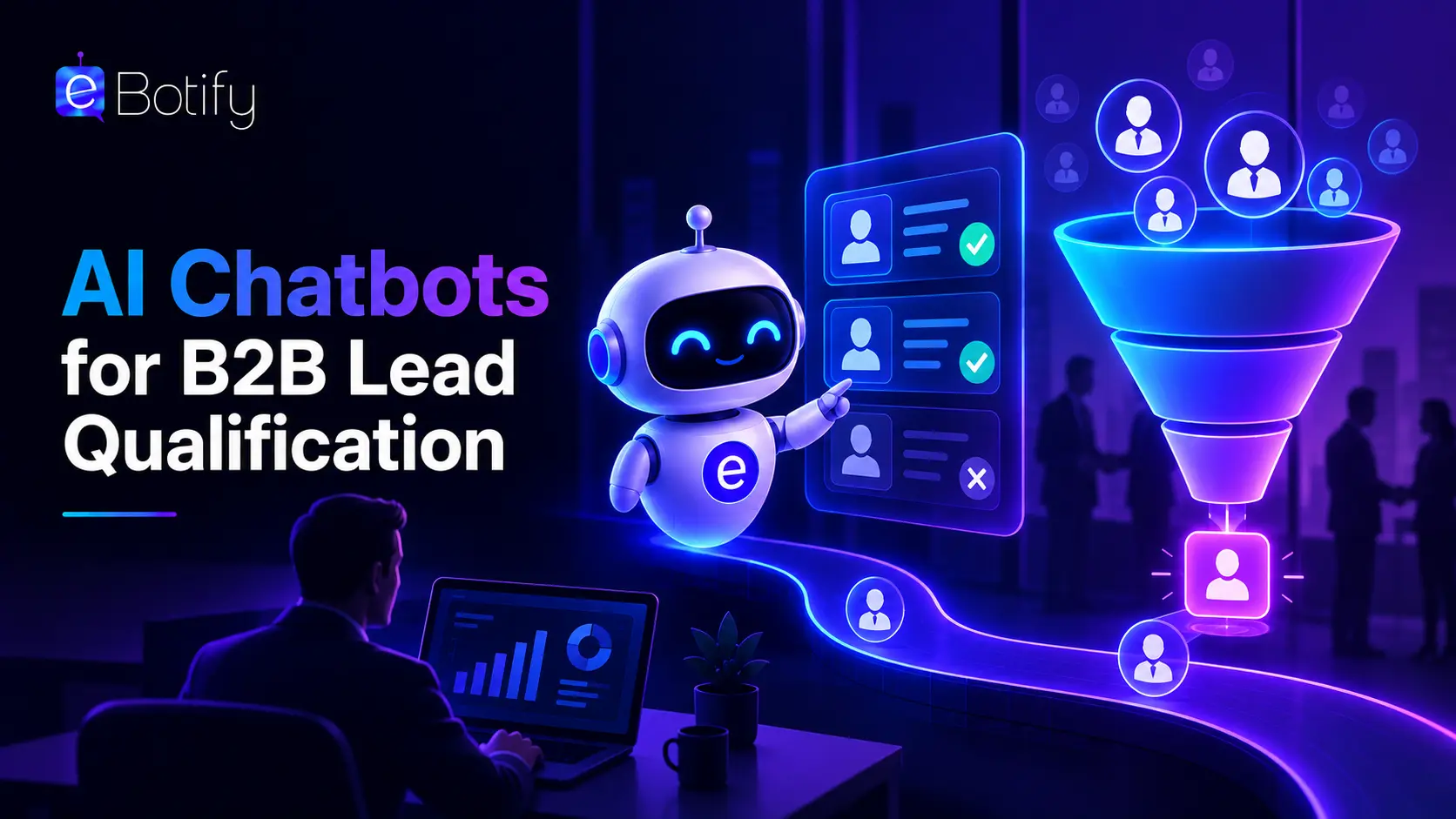
The chatbot can understand responses, identify buying signals, and use predefined qualification criteria to assess each prospect. Based on the information collected, it can prioritize promising leads, send them to the appropriate sales representative, or place less-ready prospects into a nurture process.
This makes lead qualification more conversational and immediate. A traditional form may collect a name, email address, and company, while an AI chatbot can gather useful context during the same interaction. It also gives sales teams a clearer picture of the prospect before the first conversation begins.
How Does Chatbot Qualification Work?
A chatbot qualifies leads through a simple conversational process:
1. Starts the conversation
Engages visitors and asks about their business needs.
2. Collects key details
Gathers information such as company size, requirements, budget, and timeline.
3. Identifies intent
Analyzes responses to recognize buying signals and potential fit.
4. Scores the lead
Applies qualification criteria to prioritize prospects.
5. Routes the lead
Sends qualified prospects to sales while nurturing others.
This process supports AI lead generation by turning website conversations into structured, sales-ready opportunities.
Why B2B Businesses Need Chatbot for Lead Qualification?
B2B lead qualification can become difficult when sales teams receive a high volume of inquiries with different levels of intent. Manual follow-ups take time, and important prospects can be missed when responses are delayed.
A B2B chatbot helps create a consistent first step for every visitor. It can:
- Respond to prospects instantly, including outside business hours.
- Ask qualification questions based on the visitor’s needs.
- Separate high-intent prospects from early-stage inquiries.
- Capture useful context before a sales representative follows up.
- Reduce time spent reviewing unqualified leads.
This gives sales teams better information at the start of the conversation and helps them spend more time on prospects with a genuine business need.
Key Features of Lead Qualification Chatbot
A B2B sales chatbot needs to do more than answer common questions. The right features help it understand prospects, capture useful information, and support sales teams throughout the buying journey.
1. Natural conversations
Understands questions and responses without forcing visitors through rigid menus.
2. Lead scoring
Assigns scores based on fit, intent, engagement, and other criteria.
3. CRM integration
Sends lead details and conversation history directly into existing sales systems.
4. Smart routing
Connects qualified prospects with the right sales representative or team.
5. Data collection
Captures company size, requirements, budget, timeline, and other relevant details.
6. Human handoff
Transfers important conversations to sales representatives with the relevant context.
7. Analytics
Tracks conversations, engagement, conversion rates, and common drop-off points.
8. Multichannel support
Engages prospects across websites and other channels where B2B buyers interact.
B2B Use Cases for AI Chatbots
AI chatbots can support different stages of the B2B buying journey, depending on the business model and sales process.
1. SaaS companies
Identify visitors interested in specific products, plans, integrations, or use cases.
2. Professional services
Understand project requirements, business challenges, timelines, and service needs before a sales call.
3. Technology providers
Screen prospects based on company size, technical requirements, industry, and purchasing intent.
4. Financial services
Collect initial information and direct prospects toward relevant products or teams.
5. Manufacturing
Capture requirements such as product needs, order volumes, specifications, and expected timelines.
6. Event and campaign leads
Engage visitors from campaigns, webinars, and events while capturing their interests and business details.
Benefits of AI Lead Qualification Chatbots
AI chatbots can improve how B2B teams capture and manage prospects. Their value comes from faster engagement, better lead information, and less manual work for sales teams.
1. Faster responses
Visitors get immediate answers when they show interest. This keeps potential prospects engaged during their initial research.
2. Better lead quality
Chatbots collect relevant details before passing leads to sales. Teams can focus on prospects that match their requirements.
3. 24/7 engagement
Prospects can interact with a business outside working hours. This helps capture inquiries that might otherwise wait for a response.
4. Less manual work
Routine questions and initial screening can happen automatically. Sales representatives can spend more time on meaningful conversations.
5. Consistent interactions
Every prospect can be asked relevant qualification questions. This creates a more structured process for evaluating incoming leads.
How to Choose the Right B2B Chatbot?
Choosing the right platform depends on how well it fits your sales process and existing technology. Look for features that support meaningful conversations without making the buying journey complicated.
1. AI capabilities
Choose a B2B chatbot that can understand natural questions and different types of responses. It should handle real conversations instead of relying only on fixed scripts.
2. CRM integration
Check if it connects smoothly with your existing CRM and sales tools. Lead details and conversation history should be easy for your team to access.
3. Customization
The platform should let you define questions, qualification criteria, and lead-routing rules. This makes it easier to align conversations with your sales process.
4. Human handoff
Look for a simple way to transfer important conversations to sales representatives. The relevant conversation context should remain available during the handoff.
5. Analytics
Useful reporting can show engagement, lead quality, and conversion patterns. These insights help teams improve chatbot conversations over time.
6. Data security
Check how the platform stores and protects visitor information. Strong privacy and security controls are especially important for B2B businesses.
How Can AI Chatbots Improve Your B2B Lead Process?
AI chatbots can make B2B lead generation faster and more structured by engaging visitors, collecting relevant information, identifying buying intent, and directing promising prospects to sales. With the right strategy, businesses can reduce manual effort, respond faster, and create smoother experiences for potential customers throughout their buying journey.
eBotify helps businesses build AI-powered chatbots designed for lead generation, customer engagement, and sales support. Its conversational capabilities can help businesses connect with prospects, collect useful information, and support teams across channels. With the right setup, eBotify can become a practical part of a modern B2B sales process.
FAQs
1. How can a Lead Qualification Chatbot improve the B2B sales process?
It can identify relevant prospects earlier, collect useful context, and help sales teams prioritize conversations based on business needs and buying intent.
2. Can AI chatbots replace sales representatives in B2B sales?
They can handle initial conversations and routine screening, while sales representatives remain important for complex discussions, relationship building, and final purchasing decisions.
3. What information should a B2B chatbot collect from prospects?
Useful details can include company size, business needs, requirements, budget, purchasing timeline, and the specific products or services being considered.
4. How does chatbot data help sales teams follow up?
Conversation data gives representatives useful context before contacting a prospect, helping them understand the requirement and continue the discussion more effectively.
5. What should businesses consider before adding an AI chatbot?
Businesses should evaluate CRM integration, customization, data security, analytics, human handoff, and how naturally the chatbot fits into the existing sales process.