Key Takeaways
- 01 CRM chatbot integration connects customer conversations with data, sales activities, and support workflows.
- 02 AI chatbots can capture leads, update records, and automate repetitive CRM tasks efficiently.
- 03 CRM data helps chatbots deliver personalized responses based on relevant customer information.
- 04 Businesses can use CRM-connected chatbots for sales, support, scheduling, nurturing, and feedback.
- 05 Choosing the right CRM integration depends on business goals, workflows, data, and automation needs.
AI chatbots are becoming valuable business tools that go beyond answering basic customer questions. With CRM Chatbot Integration, businesses can connect conversations with customer records, sales activities, and support workflows. This connection helps teams access relevant information faster, personalize interactions, capture leads, and manage customer journeys more efficiently across channels.
Choosing the right CRM integration can determine how effectively a chatbot supports sales, marketing, and customer service operations. A well-connected chatbot can streamline repetitive tasks, improve response times, and give teams better customer context. In this blog, we will explore the best CRM integrations for AI chatbots and how to choose one.
What is CRM Chatbot Integration?
CRM Chatbot Integration connects an AI chatbot with a company’s customer relationship management system. It allows the chatbot to exchange relevant customer information with the CRM while conversations happen. Instead of keeping chatbot interactions separate, businesses can connect customer conversations with existing records, sales activities, support requests, and other important workflows.
When integrated with a CRM, a chatbot can access approved customer information and use it to provide more relevant responses. It can also capture details shared during conversations and send them to the CRM automatically. This reduces manual data entry and helps teams maintain updated customer records without switching between multiple systems.
A well-planned integration can support several activities, including:
- Capturing and qualifying new leads
- Updating customer information
- Creating support requests
- Recording conversation details
- Triggering follow up activities
- Routing customers to the right team
- Providing sales and support teams with relevant context
The value comes from connecting customer conversations with business processes. When the chatbot and CRM work together, teams can respond with better context while reducing repetitive administrative work.
Why Businesses Integrate AI Chatbots with CRM Platforms?
CRM integrations help businesses turn chatbot conversations into useful customer and business actions. CRM Chatbot Integration can improve efficiency while giving teams better visibility into customer interactions.
1. Centralized Customer Data
Keep important customer information connected and accessible. Teams can work with updated details during conversations.
2. Faster Lead Qualification
Capture visitor details and identify potential leads quickly. Sales teams can follow up without manual data collection.
3. Automated CRM Updates
Send conversation details directly into customer records. This reduces repetitive data entry and keeps information organized.
4. Better Customer Support
Give chatbots access to relevant customer context. This helps provide faster and more personalized support.
5. Personalized Conversations
Use approved CRM information to understand customer needs. Chatbots can deliver responses that feel more relevant to each user.
6. Improved Team Productivity
Automate repetitive tasks triggered by conversations. Teams can spend more time handling complex customer needs.
7. Better Customer Insights
Connect conversation data with existing customer information. Businesses can identify patterns and make better service and sales decisions.
Key Features to Look for in a CRM Chatbot Integration
A strong CRM chatbot integration should support customer interactions while keeping important business processes connected. Look for features that improve automation, data management, and team productivity.
1. Real Time Data Access
Access relevant customer information during conversations. This helps chatbots provide accurate and useful responses.
2. Lead Capture
Collect important visitor details automatically. This makes it easier for sales teams to identify potential customers.
3. Lead Qualification
Ask relevant questions to understand customer needs. Qualified leads can then move to the appropriate sales process.
4. Automated CRM Updates
Record customer details and conversation information automatically. This reduces manual updates for sales and support teams.
5. Workflow Automation
Trigger business actions based on chatbot interactions. This can include follow-ups, notifications, assignments, or record updates.
6. Human Handoff
Transfer complex conversations to the right team member. Customer context can remain available during the handoff.
7. Analytics and Reporting
Track conversations, leads, and chatbot performance. These insights help teams identify areas for improvement.
8. Data Security
Control what customer information the chatbot can access. Strong permissions help protect sensitive business and customer data.
How Do AI Chatbots Use CRM Data During Customer Conversations?
When a chatbot connects with a CRM, it can use relevant customer information to make conversations more useful and efficient. Instead of treating every visitor the same, the chatbot can work with available context to support sales, service, and customer engagement activities.
1. Customer Identification
Chatbots can recognize existing customers using approved CRM information. This helps create smoother and more personalized conversations.
2. Personalized Responses
Relevant customer details can guide chatbot responses. Users can receive information based on their previous interactions and current needs.
3. Lead Qualification
Chatbots can collect information and assess potential leads during conversations. Captured details can then support the sales process.
4. Customer Support
Chatbots can use available customer context to handle common requests. This helps support teams respond faster when human assistance is needed.
5. Record Updates
Important conversation details can be added to CRM records. This keeps customer information updated without requiring manual entry.
6. Task Automation
Chatbot interactions can trigger predefined CRM actions. Teams can automate follow ups, assignments, notifications, and other routine activities.
Common Use Cases for CRM Integrated AI Chatbots
CRM connected chatbots can support several customer facing and internal business activities. By connecting conversations with existing workflows, businesses can reduce repetitive work and create faster customer experiences.
1. Sales and Lead Generation
Chatbots can engage website visitors and collect relevant lead information. Qualified prospects can be directed to the appropriate sales process.
2. Customer Support
Chatbots can answer common questions and access approved customer information. Complex issues can be transferred to support teams with useful conversation context.
3. Appointment Scheduling
Chatbots can help customers request appointments, consultations, or product discussions. Relevant details can be captured and shared with the CRM.
4. Lead Nurturing
Chatbots can continue conversations with prospects based on their interests and previous interactions. This helps sales teams maintain consistent follow-up.
5. Customer Retention
Chatbots can identify customer needs and provide timely assistance. Better access to customer context can help businesses improve ongoing relationships.
6. Feedback Collection
Chatbots can collect customer feedback after interactions or services. Responses can be connected with customer records for further analysis.
Best CRM Integrations for AI Chatbots
The right CRM integration depends on your business needs, existing systems, and customer engagement goals. Each option offers different capabilities for connecting chatbot conversations with sales, marketing, and support workflows.
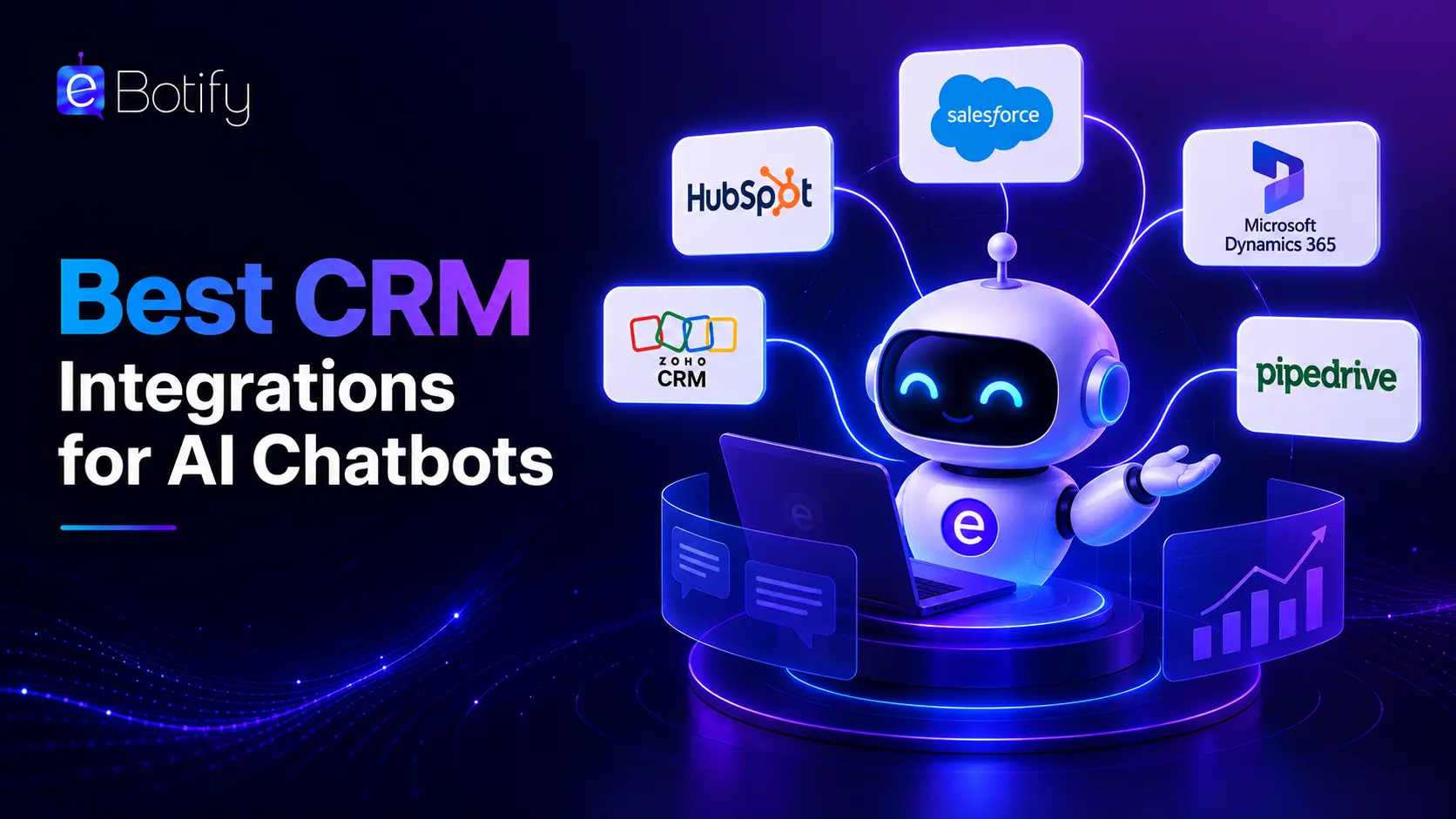
1. Salesforce Chatbot
Connects chatbot conversations with customer and sales information. It can support lead management, opportunity tracking, and automated sales workflows.
2. HubSpot Chatbot
Helps connect customer conversations with sales and marketing activities. It can support lead capture, contact management, and automated follow-ups.
3. Zoho CRM Chatbot
Connects chatbot interactions with customer records and sales activities. It can help businesses manage leads, update records, and streamline routine workflows.
4. Microsoft Dynamics 365 Chatbot
Brings chatbot interactions into existing sales and customer service processes. It can help teams manage customer information, service requests, and business activities.
5. Pipedrive Chatbot
Connects conversations with sales pipelines and lead management activities. It can help sales teams capture prospects and maintain accurate deal information.
Ready to Connect Your Chatbot with the Right CRM?
CRM integration can turn an AI chatbot into a valuable part of your customer engagement strategy. It connects conversations with customer data, automates repetitive tasks, supports lead management, and improves service efficiency. Choosing the right integration depends on your workflows, data requirements, business goals, and customer experience priorities.
eBotify helps businesses build intelligent chatbot experiences that connect smoothly with existing business systems. Its solutions can help automate conversations, capture customer information, support teams, and streamline everyday workflows. With the right chatbot strategy, eBotify can help businesses create more connected customer experiences while improving operational efficiency and team productivity.
Frequently Asked Questions
1. How does CRM Chatbot Integration affect the customer experience?
It gives chatbots access to relevant customer context, helping them provide faster, more personalized responses without repeatedly asking customers for the same information.
2. Can CRM chatbots identify when human support is needed?
Yes, chatbots can follow predefined rules to recognize complex requests and transfer conversations to the appropriate team with relevant customer context.
3. What happens when chatbot data does not match CRM records?
Businesses need proper synchronization and validation processes to prevent outdated or conflicting information from affecting customer conversations and internal workflows.
4. Can CRM chatbots support customers after a sale?
Yes, they can handle common service requests, collect feedback, provide relevant information, and help support teams maintain stronger customer relationships.
5. How much CRM access should an AI chatbot have?
A chatbot should receive only the customer data and permissions required for its specific tasks, reducing unnecessary access and supporting better data security.