Key Takeaways
- 01
AI chatbots monitor networks around the clock for suspicious activity. - 02
They respond to security incidents instantly, reducing damage and recovery time. - 03
Chatbots educate employees on cybersecurity threats through real-time guidance. - 04
Fraud prevention is stronger with chatbot-driven identity verification and alerts. - 05
Human oversight remains essential as chatbots cannot replace expert judgment.
Imagine receiving a security alert in the middle of the night. Who responds first, your IT team or an AI-powered chatbot? In today’s fast-evolving digital landscape, cyber threats are becoming more sophisticated, and businesses need smarter defense systems. But can chatbots truly help in cybersecurity? How do they detect threats, prevent attacks, and assist security teams?
Modern cybersecurity is no longer limited to firewalls and antivirus software. Organizations must monitor vast amounts of data, identify suspicious activities, and respond to incidents in real time. This is where AI-powered chatbots are making a difference. By automating threat detection, streamlining security operations, and providing instant responses, chatbots help businesses strengthen their security posture while reducing the workload on cybersecurity teams. In this blog, we will explore how chatbots are transforming cybersecurity. Let’s keep reading further!
What are Cybersecurity Chatbots?
In cybersecurity, a chatbot is computer software that communicates with people in the same way as a human would. It understands and responds to enquiries through the use of artificial intelligence (AI) and natural language processing. These chatbots assist with a variety of security responsibilities, including answering security-related queries, sending notifications about possible dangers, and detecting suspicious activity. Businesses and organizations employ cybersecurity chatbots to enhance protection, aid IT personnel, and respond quickly to security threats.
They can monitor networks, alert users to phishing attempts, and assist them in dealing with cyber dangers. While chatbots provide several benefits, they may also pose a risk if not adequately safeguarded. Hackers may attempt to use chatbot flaws to steal personal information or transmit malware. To stay safe, cybersecurity chatbots must be carefully designed with strong security measures. When used correctly, they can be a valuable tool in defending against cyber threats.
Role of Chatbots in Cybersecurity
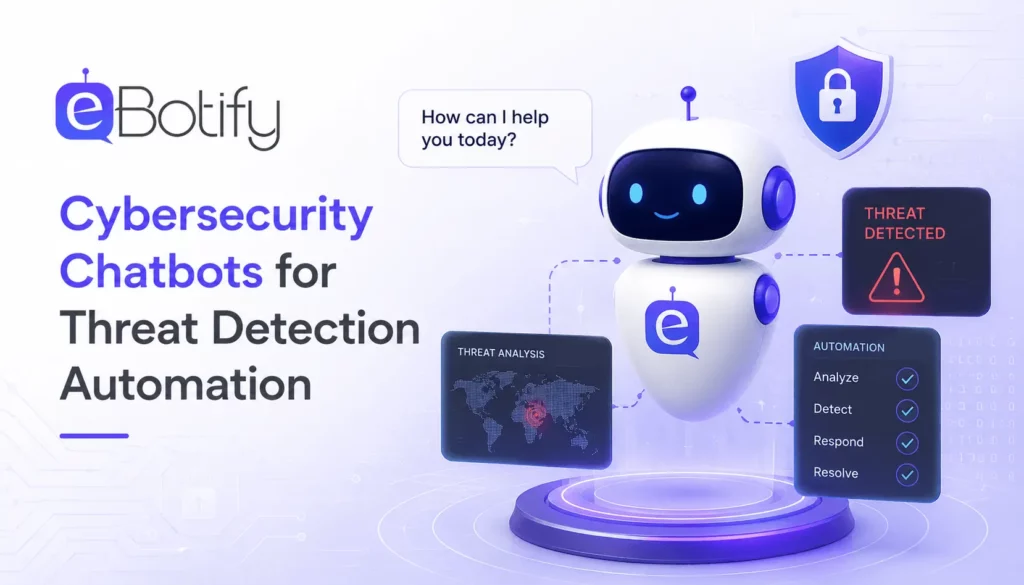
Cybersecurity chatbots help organizations strengthen their security by automating threat detection, incident response, and user support. They work around the clock to identify risks, provide real-time alerts, and assist security teams in protecting sensitive data and systems.
1. Threat Detection and Monitoring
Chatbots continuously monitor networks and systems to identify suspicious activities and potential security threats. If they detect unusual behavior, such as multiple failed login attempts or suspicious access requests, they can instantly alert security teams and trigger preventive actions.
2. Incident Response and Recovery
When a security incident occurs, chatbots can provide immediate responses and guide users through recovery steps. They can also automate tasks such as blocking suspicious accounts, reporting threats, and assisting IT teams with incident investigations.
3. Security Awareness and Training
Chatbots help educate employees about cybersecurity best practices by providing real-time guidance and answering security-related questions. They can also simulate phishing attacks and offer instant feedback to improve security awareness across the organization.
4. Fraud Prevention and Identity Verification
Chatbots support fraud prevention by monitoring login attempts, transaction patterns, and user behavior. When suspicious activity is detected, they can request additional verification methods such as OTPs or multi-factor authentication to secure accounts.
5. Security Alerts and Notifications
Chatbots deliver instant security alerts about unusual logins, data breaches, software vulnerabilities, and other threats. This helps users and IT teams take quick action before security issues escalate into larger problems.
6. Vulnerability Management
Chatbots can help identify outdated software, misconfigurations, and known security weaknesses across systems. They notify teams about vulnerabilities and recommend corrective actions to reduce security risks.
7. Threat Intelligence Support
By gathering and analyzing information from multiple security sources, chatbots help organizations stay informed about emerging cyber threats. They provide actionable insights that enable faster and more informed security decisions.
8. Compliance and Policy Assistance
Chatbots assist organizations in maintaining compliance with cybersecurity regulations and internal security policies. They can answer compliance-related questions, provide policy guidance, and help employees follow security requirements correctly.
Challenges and Limitations of Chatbots in Cybersecurity
1. Limited Threat Understanding: May struggle with advanced and evolving cyberattacks.
2. False Positives and Negatives: Can misidentify threats or miss genuine attacks.
3. Data Quality Dependence: Performance relies onaccurate and updated security data.
4. Vulnerability to Manipulation: Hackers may exploit chatbot weaknesses and vulnerabilities.
5. Privacy and Security Concerns: Handling sensitive data requires strong protection measures.
6. Integration Complexity: Connecting with existing systems can be technically challenging.
7. Continuous Maintenance Needs: Requires regular updates to detect emerging threats.
8. Lack of Human Judgment: Cannot fully replace expert analysis and decision-making.
Ready to Strengthen Your Cybersecurity with AI-Powered Chatbots?
Chatbots play a vital role in cybersecurity by detecting threats, automating responses, preventing fraud, and educating users. They provide 24/7 monitoring, helping businesses respond to cyber risks faster and more effectively. However, to prevent misuse, they must have strong security measures like encryption and multi-factor authentication.
eBotify is a cutting-edge AI chatbot platform designed to enhance cybersecurity. It helps businesses detect threats, send real-time alerts, and automate security tasks, reducing risks and improving response times. By integrating eBotify, organizations can strengthen their security and stay ahead of cyber threats.
Frequently Asked Questions
1. How do chatbots in cybersecurity actually differ from traditional security software that businesses already have in place?
Traditional security tools detect and log threats passively. Chatbots add a conversational and responsive layer, actively alerting teams, guiding users through incidents, and automating immediate actions. They work alongside existing tools rather than replacing them, making the overall security setup faster and more responsive.
2. Can a cybersecurity chatbot genuinely respond fast enough to stop an attack before real damage is done?
For certain attack types, yes. Blocking suspicious accounts, triggering multi-factor authentication, and alerting security teams can all happen within seconds. The speed advantage is most valuable during the early stages of an incident when every minute of delayed response increases potential damage significantly.
3. What stops hackers from targeting the chatbot itself as an entry point into a business system?
This is a real concern and one worth taking seriously. Poorly secured chatbots can become vulnerabilities. Strong encryption, access controls, and regular security audits on the chatbot itself are essential. The same diligence applied to other systems should be applied to the chatbot without exception.
4. How useful are cybersecurity chatbots for smaller businesses that do not have a dedicated IT security team?
Particularly useful. Smaller businesses often lack the personnel to monitor threats around the clock. A chatbot fills that gap by providing continuous monitoring, instant alerts, and guided responses. It effectively gives smaller teams capabilities that would otherwise require significantly more headcount and budget to maintain.
6. Should businesses rely completely on chatbots for cybersecurity decisions or is human oversight still necessary?
Human oversight remains non-negotiable. Chatbots handle speed and volume well but lack the contextual judgment needed for complex or novel threats. The smartest approach treats chatbots as a first line of response that surfaces issues quickly while trained security professionals make the final calls on serious incidents.