Key Takeaways
- 01
Shopify AI chatbots provide instant customer support and help shoppers make faster purchase decisions. - 02
Automated product recommendations can guide customers toward relevant products based on their needs. - 03
Abandoned cart conversations can encourage shoppers to return and complete purchases. - 04
Shopify automation reduces repetitive support tasks while keeping customers engaged throughout their buying journey. - 05
Effective chatbots combine personalization, store data, automation, analytics, and human support for better ecommerce experiences.
Running a Shopify store involves more than attracting visitors and listing products. Customers expect quick answers about products, orders, shipping, returns, and payments before making a purchase. When responses are delayed, shoppers may leave without buying. Cart abandonment also remains a challenge when customers need additional assistance before completing checkout.
A Shopify AI chatbot can automate these conversations and provide instant support throughout the customer journey. It can answer common questions, recommend products, track orders, and engage shoppers who leave items in their carts. By combining conversational support with Shopify automation, businesses can improve customer experiences while creating more opportunities to convert visitors into customers.
What is a Shopify AI Chatbot?
A Shopify AI chatbot is an intelligent virtual assistant that interacts with customers directly through an online store. It uses artificial intelligence to understand customer questions and provide relevant responses about products, orders, shipping, returns, payments, and other store related concerns.
Unlike basic chatbots that follow fixed scripts, a Shopify chatbot can understand different ways customers ask questions and respond based on the conversation. When connected with Shopify data and business workflows, it can also assist customers with product discovery, order updates, recommendations, and purchase related decisions.
For ecommerce businesses, this makes customer support more responsive while reducing the amount of repetitive work handled by support teams. The chatbot can manage routine conversations automatically and hand complex issues to human agents when required.
How Shopify AI Chatbots Help Increase Sales?
A Shopify chatbot helps stores engage shoppers instantly and remove common barriers to purchase. It supports customers at key moments while automating repetitive sales conversations.
1. Guide Product Discovery
Helps shoppers find relevant products based on their questions, preferences, and requirements.
2. Answer Customer Questions
Provides instant answers about products, pricing, shipping, returns, and other purchase related concerns.
3. Recommend Relevant Products
Suggests suitable products during conversations, helping customers make faster and more confident buying decisions.
4. Recover Abandoned Carts
Sends timely conversations to shoppers who leave products in their carts and encourages them to complete purchases.
5. Support After Hours
Continues assisting customers outside business hours, ensuring they can get help whenever they need it.
Key Shopify AI Chatbot Use Cases
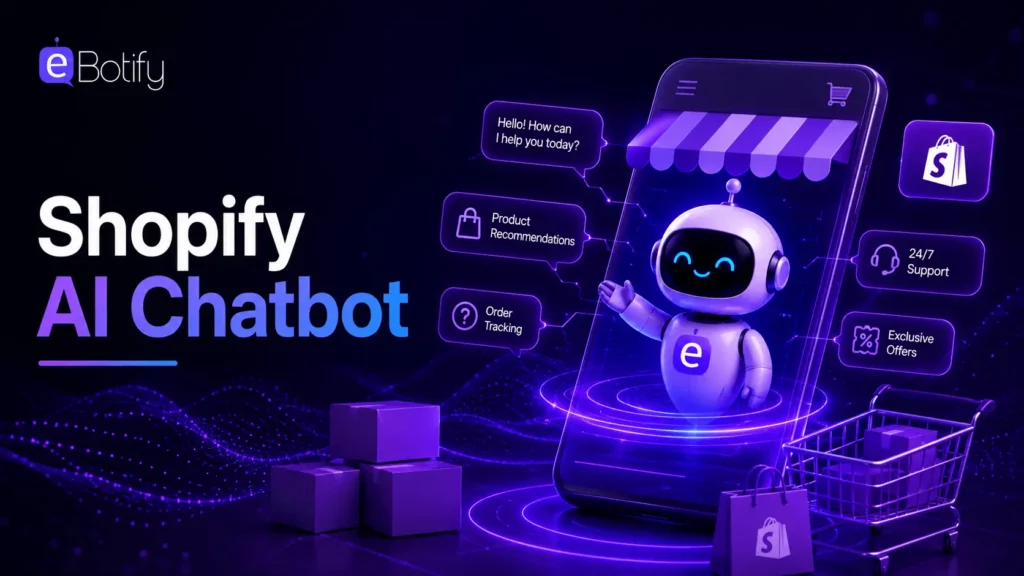
Shopify chatbots can support customers across different stages of the buying journey. They also automate routine interactions that require frequent responses from ecommerce teams.
1. Product Discovery
Helps customers discover suitable products based on their needs and preferences.
2. Order Tracking
Provides quick updates about order status, shipping, and delivery information.
3. Customer Support
Handles common questions about products, payments, returns, shipping, and store policies.
4. Cart Recovery
Engages shoppers who abandon their carts and encourages them to complete checkout.
5. Sales Assistance
Supports purchasing decisions with product information, recommendations, and timely responses.
How Shopify Automation Works?
Shopify automation connects AI chatbot conversations with routine store processes. It helps businesses respond faster while reducing repetitive manual tasks.
1. Connect Store Data
The chatbot accesses relevant product, inventory, and order information to provide accurate responses.
2. Automate Customer Actions
It can trigger actions such as order updates, cart reminders, and support notifications.
3. Personalize Conversations
Customer data helps the chatbot deliver more relevant product suggestions and responses.
4. Route Complex Queries
Difficult requests can be transferred to human agents for personalized assistance.
5. Manage Order Updates
Automatically shares order status, shipping details, and delivery updates with customers.
6. Trigger Cart Reminders
Sends timely reminders to customers who leave products in their shopping carts.
7. Track Customer Behavior
Analyzes conversations and interactions to understand customer interests and buying patterns.
8. Streamline Support Tasks
Automates repetitive support requests so teams can focus on complex customer needs.
What to Look for in a Shopify AI Chatbot?
The right chatbot should support both customer engagement and ecommerce operations. Businesses should evaluate features that improve automation, personalization, and overall store performance.
1. Shopify Integration
Choose a chatbot that connects smoothly with your Shopify store and its essential data.
2. AI Personalization
Look for AI capabilities that tailor conversations and recommendations to individual customer needs.
3. Easy Automation
Select tools that simplify repetitive tasks such as customer queries, cart reminders, and order updates.
4. Human Handoff
Ensure complex conversations can move smoothly from the chatbot to a human support agent.
5. Performance Analytics
Use reporting features to monitor conversations, customer engagement, conversions, and chatbot performance.
6. Scalable Architecture
Choose a solution that can handle growing traffic, product catalogs, and customer interactions.
Shopify AI Chatbot vs Traditional Ecommerce Chatbot
AI chatbots offer more flexible and intelligent conversations than traditional rule based chatbots. The differences become especially important when stores want to personalize customer interactions and automate sales activities.
| Feature | Shopify AI Chatbot | Traditional Ecommerce Chatbot |
|---|---|---|
| Customer Queries | Understands natural language and conversational context | Relies on predefined questions and responses |
| Personalization | Provides responses and recommendations based on customer needs | Offers limited personalization |
| Product Discovery | Can suggest relevant products through conversations | Usually follows fixed product flows |
| Automation | Supports dynamic workflows and automated actions | Handles basic predefined tasks |
| Scalability | Adapts to larger volumes of conversations | Requires additional rule configuration |
| Customer Support | Handles varied queries and escalates complex issues | Mainly handles common FAQs |
| Sales Support | Can guide shoppers toward suitable purchase decisions | Provides limited sales assistance |
How to Implement a Shopify AI Chatbot Successfully?
A successful chatbot implementation starts with clear customer and business goals. Proper planning helps businesses create useful conversations while delivering measurable results.
1. Identify Key Journeys
Find customer journeys where instant assistance can improve engagement, support, or conversions.
2. Connect Shopify Data
Integrate relevant product, customer, inventory, and order data for accurate chatbot responses.
3. Build Conversation Flows
Create simple conversation paths for product discovery, support, recommendations, and cart recovery.
4. Test Chatbot Responses
Test different customer questions to identify inaccurate, confusing, or incomplete responses before launch.
5. Monitor Performance
Track conversations, engagement, conversions, and customer feedback to continuously improve chatbot performance.
Why Should Shopify Stores Invest in AI Chatbot Automation?
AI chatbot automation can help Shopify stores create faster and more consistent customer experiences. It also gives ecommerce teams more time to focus on growth and higher value activities.
1. Faster Customer Support
AI chatbots respond instantly to common questions, reducing waiting times and improving customer satisfaction.
2. Higher Sales Opportunities
Personalized recommendations and timely conversations can help shoppers move closer to purchase.
3. Lower Support Workload
Automation handles repetitive customer requests, allowing support teams to focus on complex issues.
4. Better Customer Experience
Consistent and relevant responses make it easier for customers to find information and complete purchases.
5. Continuous Availability
AI chatbots can assist customers around the clock without depending on support team availability.
Ready to Turn Shopify Conversations into Sales?
A Shopify AI chatbot can help stores deliver faster support, guide product discovery, recover abandoned carts, and automate repetitive conversations. By connecting customer interactions with Shopify automation, businesses can create smoother buying journeys, improve engagement, and give shoppers timely assistance at every stage.
eBotify helps businesses build AI powered chatbots that automate customer conversations and support business workflows. With eBotify, Shopify stores can create smarter customer experiences, handle routine queries, and engage shoppers more effectively while their teams focus on growth and higher value tasks.
Frequently Asked Questions
1. How can a Shopify AI chatbot help improve customer experience?
It provides quick answers, personalized recommendations, order updates, and continuous support, making shopping easier and reducing delays during purchase decisions.
2. Can chatbots help recover abandoned shopping carts?
Yes, automated reminders can reconnect with shoppers who leave products behind and encourage them to complete checkout at the right time.
3. What information can an ecommerce chatbot handle?
It can answer questions about products, pricing, shipping, returns, payments, orders, and other common concerns customers have before purchasing.
4. Can Shopify chatbots reduce the workload for support teams?
Yes, chatbots can handle repetitive questions and routine requests, allowing support teams to spend more time resolving complex customer issues.
5. What should businesses consider before choosing a Shopify chatbot?
Important factors include Shopify integration, personalization, automation capabilities, human handoff, analytics, security, and the ability to support future business growth.