A healthcare AI chatbot is changing how patients access care and communicate with healthcare providers. People expect quick answers, convenient scheduling, and reliable support without unnecessary waiting. Hospitals and clinics are adopting intelligent chatbots to improve patient experiences while reducing administrative workloads. This shift is creating smarter healthcare interactions that benefit both patients and medical teams.
As healthcare demands continue growing, providers need solutions that improve efficiency without compromising quality. AI chatbots are helping organizations streamline patient communication, automate routine tasks, and deliver personalized assistance throughout every stage of care. In this blog, you will learn how healthcare AI chatbots work, their benefits, essential features, real-world use cases, implementation best practices, and future trends.
Want an AI assistant that provides instant support around the clock? At ebotify, we offer AI Assistant Development Services to automate conversations and improve customer satisfaction.
What is a Healthcare AI Chatbot?
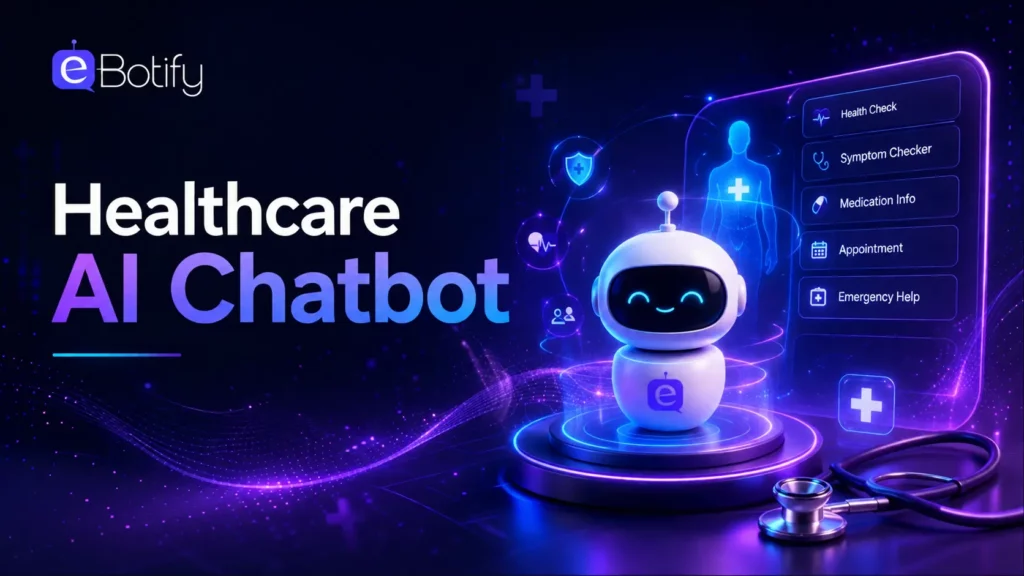
A healthcare AI chatbot is an intelligent virtual assistant that communicates with patients using artificial intelligence. It understands questions, provides relevant responses, and assists with common healthcare tasks. Healthcare organizations use these chatbots to deliver faster, more accessible, and consistent patient support.
Unlike basic chatbots, a healthcare AI chatbot can understand patient intent and respond with greater accuracy. It helps with appointment scheduling, symptom guidance, medication reminders, and general health information. This improves patient experiences while reducing routine administrative work for healthcare staff.
Core Functionalities at a Glance
1. Symptom Assessment and Triage – Evaluates symptoms and guides patients toward appropriate care.
2. Appointment Scheduling – Books, reschedules, and manages appointments anytime with ease.
3. Medication Management – Sends reminders and supports prescription refill tracking.
4. Mental Health Support – Provides continuous emotional support and guided wellness assistance.
5. Post-Discharge Follow-Ups – Monitors recovery progress and identifies potential health concerns.
6. Billing and Administrative Support – Answers billing questions and simplifies insurance-related inquiries.
Why are Healthcare Organizations Investing in AI Chatbots?
Healthcare organizations are under constant pressure to improve patient care while managing growing operational demands. Patients expect faster responses, easier access to healthcare services, and personalized communication at every stage of their journey. A healthcare AI chatbot helps providers meet these expectations by automating routine interactions and improving overall service quality.
Many organizations are also adopting a medical AI chatbot and healthcare virtual assistant to reduce administrative workloads and support patients around the clock. These intelligent solutions allow healthcare professionals to spend more time on clinical care while ensuring patients receive timely, accurate, and consistent assistance.
1. Increasing Patient Volumes
More patients create higher demand for appointments, inquiries, and support. AI chatbots manage routine requests without increasing staff workload.
2. Staff Shortages
Limited healthcare staff often struggle with repetitive administrative responsibilities. Chatbots automate common tasks, allowing medical teams to focus on patient care.
3. Rising Administrative Workload
Appointment scheduling, follow-ups, and answering common questions consume valuable time. AI chatbots streamline these everyday administrative processes.
3. Need for Better Patient Engagement
Patients expect quick communication and regular updates throughout their healthcare journey. Chatbots provide timely responses and improve overall patient engagement.
4. Demand for Personalized Healthcare Experiences
Every patient has unique healthcare needs and preferences. AI-powered virtual assistants deliver personalized reminders, recommendations, and relevant healthcare information based on individual interactions.
How Do Healthcare AI Chatbots Fit Into Modern Healthcare Workflows?
Healthcare AI chatbots do more than answer patient questions. They connect different stages of the healthcare journey, helping providers deliver faster communication and better coordination. By integrating with existing healthcare systems, chatbots become an active part of daily clinical and administrative workflows rather than functioning as standalone support tools.
1. Patient Intake and Registration
Chatbots collect patient details, verify information, and complete pre-visit forms before appointments. This reduces paperwork and helps healthcare providers prepare in advance.
2. Clinical Coordination
A healthcare AI chatbot shares relevant patient information with connected systems, ensuring doctors and care teams have timely access to important details during consultations.
3. Care Continuity
After treatment, chatbots maintain communication through follow-up messages, recovery check-ins, and care instructions. This helps patients stay engaged beyond their hospital visit.
4. Cross-Department Communication
Chatbots support coordination between departments by directing patient requests to the appropriate teams. This minimizes delays and improves operational efficiency.
5. Real-Time Information Access
Patients can quickly receive updates about appointments, reports, or hospital services without waiting for staff assistance, creating a smoother healthcare experience.
Key Technologies Behind a Healthcare AI Chatbot
1. Natural Language Processing (NLP): Enables chatbots to understand patient questions and respond in natural language.
2. Machine Learning: Improves response accuracy by learning from interactions and healthcare data.
3. Generative AI: Creates conversational, context-aware responses for more personalized patient experiences.
4. Knowledge Bases: Retrieves trusted medical information from approved healthcare resources and policies.
5. EHR and Healthcare System Integration: Connects with clinical systems to access and update authorized patient information.
6. Speech Recognition: Supports voice conversations for patients who prefer hands-free interactions.
7. Data Encryption and Security: Protects patient information through secure communication and access controls.
What to Look for in a Healthcare AI Chatbot?
Healthcare organizations should evaluate AI chatbots beyond conversational abilities. The right solution should align with clinical workflows, security requirements, and future growth. A reliable patient support chatbot should deliver accurate assistance while integrating seamlessly with existing healthcare systems. Choosing a scalable platform ensures long-term value as patient expectations continue evolving.
1. Accurate Medical Understanding
The chatbot should understand healthcare terminology and respond with reliable, context-aware information.
2. Easy Integration
It should connect smoothly with EHRs, patient portals, CRMs, and hospital management systems.
3. Strong Security Controls
Patient data must remain protected through encryption, secure authentication, and role-based access.
4. Human Handoff
Complex or urgent conversations should transfer seamlessly to healthcare professionals when necessary.
5. Customization
Healthcare providers should tailor workflows, responses, and branding to match organizational requirements.
6. Scalability
The solution should support increasing patient volumes without affecting response quality or performance.
7. Analytics and Performance Monitoring
Built-in reporting should help organizations measure chatbot performance and identify improvement opportunities.
Best Practices for Implementing a Healthcare AI Chatbot
A well-designed hospital AI chatbot should support existing clinical workflows rather than disrupt them. Following the right implementation approach helps healthcare organizations maximize long-term value while maintaining compliance and delivering consistent patient experiences.
1. Define Clear Business Objectives
Identify the problems the chatbot should solve before development begins.
2. Use High-Quality Healthcare Data
Train the chatbot with accurate, up-to-date, and clinically reviewed information.
3. Integrate with Existing Systems
Connect the chatbot with EHRs, patient portals, CRM platforms, and scheduling software.
4. Prioritize Security and Compliance
Implement strong encryption, secure authentication, and healthcare regulatory requirements from the start.
5. Keep Human Support Available
Allow healthcare professionals to take over conversations requiring medical judgment or urgent attention.
6. Test Before Full Deployment
Evaluate chatbot performance with real-world scenarios and refine responses before launch.
7. Monitor and Improve Continuously
Review conversations, user feedback, and performance metrics to keep the chatbot accurate and effective.
Ready to Build a Healthcare AI Chatbot for Your Organization?
Healthcare AI chatbots are becoming an essential part of modern healthcare by improving communication, simplifying routine processes, and supporting better patient experiences. With the right strategy, technology, and integrations, healthcare organizations can deliver efficient, secure, and accessible care while helping medical teams focus on clinical responsibilities.
eBotify helps healthcare providers create secure, intelligent AI chatbots that streamline patient communication, automate routine tasks, and integrate with existing healthcare systems. Whether you need appointment automation, patient engagement, or a custom healthcare virtual assistant, our experts can build a solution tailored to your organization.
FAQs
1. How accurate is a healthcare AI chatbot in answering patient questions?
A healthcare AI chatbot can accurately answer common healthcare questions when trained with reliable medical information. For complex symptoms or emergencies, it should direct patients to qualified healthcare professionals instead of providing medical diagnoses.
2. Can a healthcare AI chatbot integrate with existing hospital systems?
Yes. Modern healthcare AI chatbots can integrate with electronic health records, patient portals, CRM platforms, appointment scheduling software, and hospital management systems. This enables seamless data sharing and improves operational efficiency across healthcare organizations.
3. Is patient data secure when using a healthcare AI chatbot?
Reputable healthcare AI chatbots use encryption, secure authentication, and regulatory compliance measures to protect patient information. Organizations should also follow healthcare privacy standards and implement proper access controls to maintain data security.
4. Can healthcare AI chatbots completely replace healthcare professionals?
No. Healthcare AI chatbots are designed to support healthcare teams by handling routine tasks and patient communication. Medical decisions, diagnoses, and emergency situations should always remain under the supervision of qualified healthcare professionals.
5. How can healthcare organizations choose the right AI chatbot solution?
Healthcare providers should evaluate chatbot accuracy, security, integration capabilities, scalability, customization options, and ongoing support. Selecting a solution that aligns with existing workflows ensures better adoption and long-term operational success.