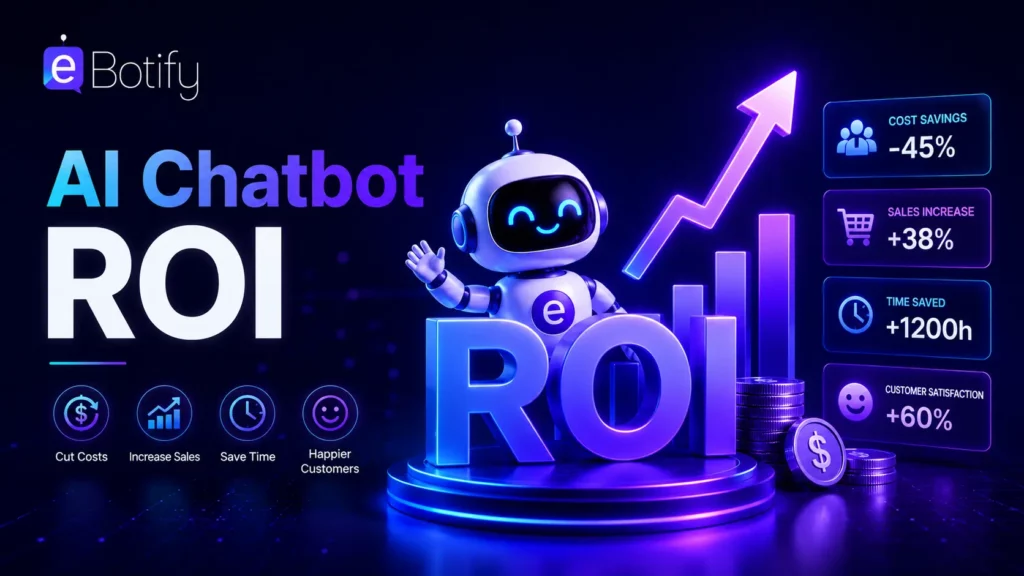
Key Takeaways
- 01
Chatbot ROI connects automation costs with measurable savings, revenue contributions, and business improvements. - 02
Tracking resolution rates and customer satisfaction helps evaluate chatbot performance beyond conversation volume. - 03
Chatbot conversion rates reveal how effectively interactions generate qualified leads, purchases, and bookings. - 04
Customer service automation can reduce repetitive workloads and improve support team productivity. - 05
Regular performance reviews help businesses control costs and improve chatbot returns over time.
An AI chatbot can handle thousands of conversations, respond within seconds, and capture potential leads around the clock. But activity alone does not prove business success. AI chatbot ROI reveals the real impact of automation by connecting chatbot performance with measurable savings, revenue opportunities, and improvements in customer service.
The real value lies in understanding what these automated interactions contribute to business growth and where costs can be reduced. In this blog, we explain how to calculate AI chatbot ROI, identify the right performance metrics, and measure the business value of chatbot automation.
What Is AI Chatbot ROI?
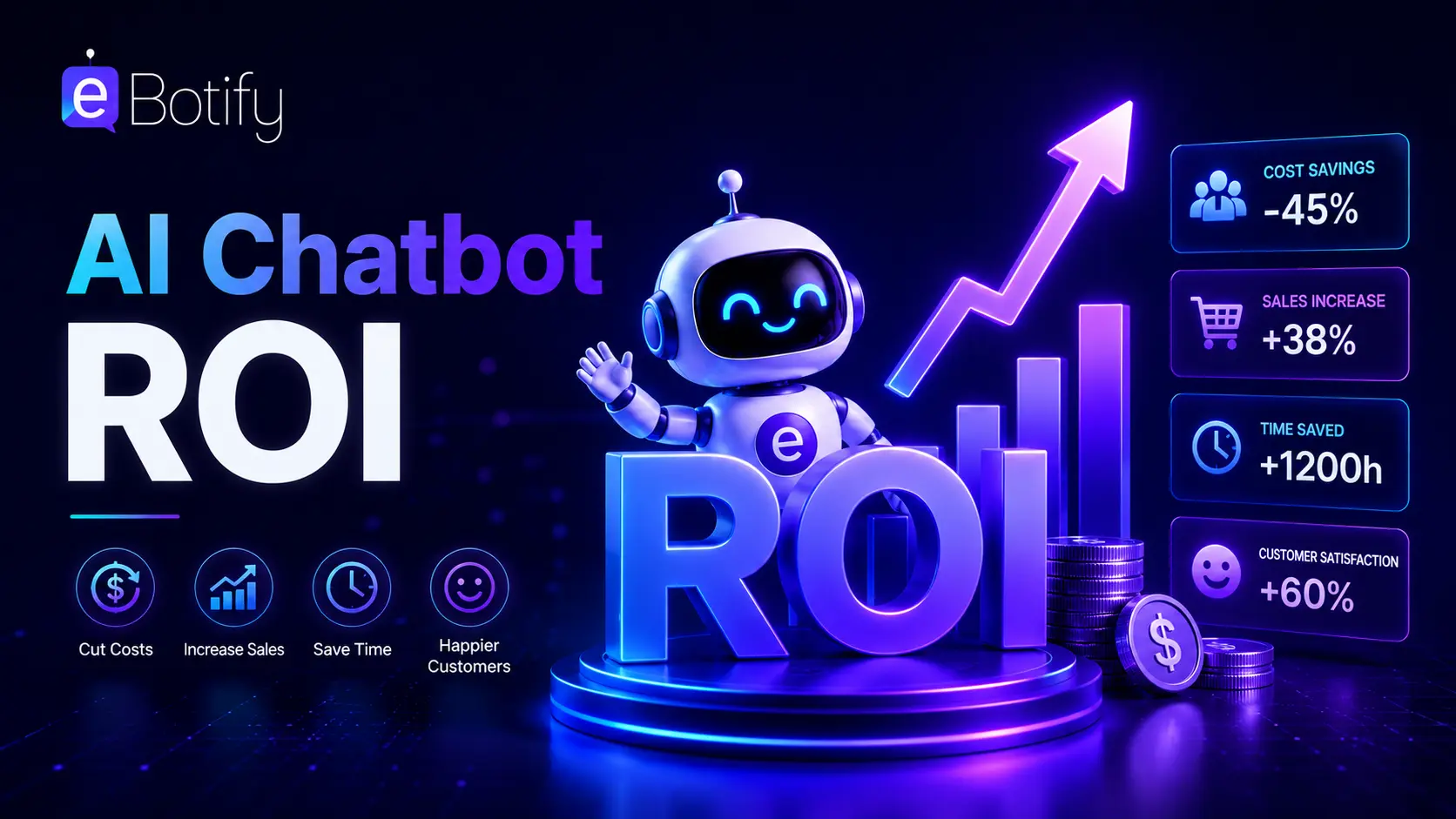
AI Chatbot ROI measures the financial return a business gains from its chatbot compared with the cost of implementing and maintaining it. It helps businesses understand whether automation is reducing operational expenses, improving lead generation, or contributing to sales. A positive return indicates that the measurable benefits exceed the investment.
However, chatbot ROI is not determined by the number of conversations handled alone. Businesses must consider actual cost savings, qualified leads, successful conversions, and customer service improvements alongside software, integration, and maintenance expenses. Tracking these factors helps decision-makers identify which chatbot activities deliver value and where improvements are needed to achieve better returns.
What Business Benefits Contribute to Chatbot ROI?
The real chatbot benefits become clear when automation solves everyday business problems and produces measurable results. Businesses can evaluate these benefits by looking at how chatbots affect operating costs, sales opportunities, and customer interactions.
1. Reduced customer support costs
Automating repetitive queries helps support teams manage routine requests with less manual effort.
2. Improved lead generation
Chatbots capture prospect details, qualify enquiries, and direct potential customers to the sales team.
3. Better conversion opportunities
Instant answers and relevant product recommendations help customers make informed purchasing decisions.
4. Faster customer responses
Automated assistance provides immediate answers and supports customers outside regular business hours.
5. Higher team productivity
Employees can focus on complex customer concerns, relationship building, and tasks that require human judgment.
These benefits contribute to business value when they produce measurable improvements. Tracking changes in support costs, qualified leads, and completed purchases helps businesses determine which chatbot activities deliver meaningful financial returns.
Key Metrics to Track When Measuring AI Chatbot ROI
Measuring chatbot performance requires the right metrics to connect automation with business outcomes. Tracking these indicators helps businesses understand where chatbots save time, improve customer experiences, and contribute to revenue growth.
1. Chatbot resolution rate
Measures how many conversations are successfully resolved without human assistance.
2. Cost per resolution
Tracks the average cost of resolving a customer query through chatbot automation.
3. Chatbot conversion rate
Measures the percentage of chatbot interactions that lead to purchases, qualified leads, or bookings.
4. Lead qualification rate
Identifies how many chatbot-generated leads meet the business’s sales criteria.
5. Customer satisfaction (CSAT)
Evaluates customer satisfaction with chatbot interactions through feedback and surveys.
6. Response and resolution time
Tracks how quickly chatbots respond to enquiries and help customers resolve issues.
These metrics provide a clearer picture of chatbot effectiveness. Businesses should evaluate them together because faster responses or higher resolution rates alone do not guarantee better financial returns.
Steps to Measure the Business Value of Chatbot Automation
Measuring business value requires a consistent process that connects chatbot performance with financial outcomes. These steps help businesses evaluate AI automation ROI and identify opportunities to improve results.
1. Define Clear Business Goals
Identify the primary objectives, such as reducing support costs, generating qualified leads, or improving customer satisfaction. Set measurable targets before implementation.
2. Establish a Performance Baseline
Record existing support costs, response times, conversion rates, and agent workloads. Use these figures to compare performance after chatbot deployment.
3. Track Chatbot Conversion Rate
Measure how many chatbot interactions lead to purchases, qualified leads, or bookings. Connect chatbot activity with CRM and sales data to track conversions accurately.
4. Calculate Cost Savings
Compare support expenses before and after automation. Account for implementation, subscription, integration, and maintenance costs.
5. Review Results and Optimize
Evaluate performance against business goals at regular intervals. Improve chatbot responses, workflows, and human handoffs based on the findings.
How Do Chatbots Improve Customer Service ROI?
Chatbots can improve customer service ROI by reducing repetitive workloads, providing faster responses, and helping support teams manage enquiries more efficiently. Businesses should measure these improvements against actual operating costs to determine the financial value of automation.
1. Lower support expenses
Automating routine questions reduces the manual effort required to handle common enquiries.
2. Faster issue resolution
Instant responses help customers find information without waiting for an available agent.
3. Better agent productivity
Support teams can focus on complex cases that require human attention and problem-solving.
4. Consistent customer support
Chatbots provide standard answers to frequently asked questions across supported channels.
5. Improved service availability
Automated assistance helps customers access information outside regular business hours.
How to Improve Chatbot ROI Over Time?
Achieving better returns requires regular monitoring and improvements based on actual chatbot performance. Businesses can strengthen results through the following practices.
- Update chatbot knowledge: Keep answers accurate, relevant, and aligned with current business information.
- Analyze failed conversations: Identify unanswered questions and improve responses to common customer issues.
- Refine lead qualification: Use relevant questions to identify suitable prospects and direct them to sales teams.
- Improve human handoffs: Make it easy for customers to reach a human agent when necessary.
- Monitor operating costs: Review subscription, integration, and maintenance expenses against measurable business benefits.
- Review performance regularly: Compare key metrics against business goals and adjust chatbot workflows accordingly.
Is Your Chatbot Delivering Real Business Value?
Measuring AI chatbot ROI helps businesses understand how automation contributes to cost savings, customer satisfaction, and revenue growth. By tracking the right metrics, evaluating operating expenses, and reviewing performance regularly, businesses can make informed decisions about their chatbot investments and identify areas for improvement.
eBotify offers chatbot development to help businesses automate customer interactions, capture leads, and improve support workflows. With the right strategy and continuous optimization, businesses can turn chatbot automation into measurable value while delivering a better customer experience.
Frequently Asked Questions
1. How can businesses tell when a chatbot needs improvement?
Repeated customer queries, unresolved conversations, declining satisfaction, and poor conversion rates can indicate that chatbot responses or workflows need attention.
2. Can AI chatbot ROI decline after a successful launch?
Yes, rising usage costs, outdated information, and changing customer needs can reduce returns if chatbot performance is not reviewed regularly.
3. How can businesses balance chatbot automation with human support?
Automate routine enquiries while allowing customers to reach human agents for complex issues, sensitive concerns, or situations requiring personal attention.
4. What should businesses do if chatbot engagement is high, but sales remain low?
Review lead quality, conversation flow, response relevance, and conversion tracking to identify where potential customers disengage before completing an action.
5. How frequently should businesses review AI chatbot ROI?
Monthly reviews can help businesses identify cost changes, performance issues, and conversion trends, while larger evaluations can assess progress against long-term goals.