Key Takeaways
- 01
Emotionally intelligent chatbots detect feelings and respond with real empathy. - 02
They adapt tone and style based on each user’s mood. - 03
Empathetic responses build stronger customer trust and long-term loyalty. - 04
These chatbots handle sensitive situations calmly without generic or robotic replies. - 05
Emotional AI improves engagement while keeping support fast and cost-effective.
Have you ever chatted with a bot that truly understood your emotions? Imagine a chatbot that doesn’t just respond with generic answers but actually senses your frustration, joy, or confusion and replies accordingly. Sounds futuristic, right? Emotionally intelligent chatbots are transforming the way we interact with AI, making conversations feel more natural and human-like. But how do they work? And why are they becoming so important in customer service, healthcare, and beyond?
Emotionally intelligent chatbots use artificial intelligence, natural language processing, and sentiment analysis to understand human emotions during conversations. Instead of giving robotic replies, these advanced chatbots analyze tone, words, and user behavior to respond in a more empathetic and personalized way. Businesses are increasingly adopting these chatbots to improve customer experiences, build stronger relationships, and create more meaningful digital interactions.
What are Emotionally Intelligent Chatbots?
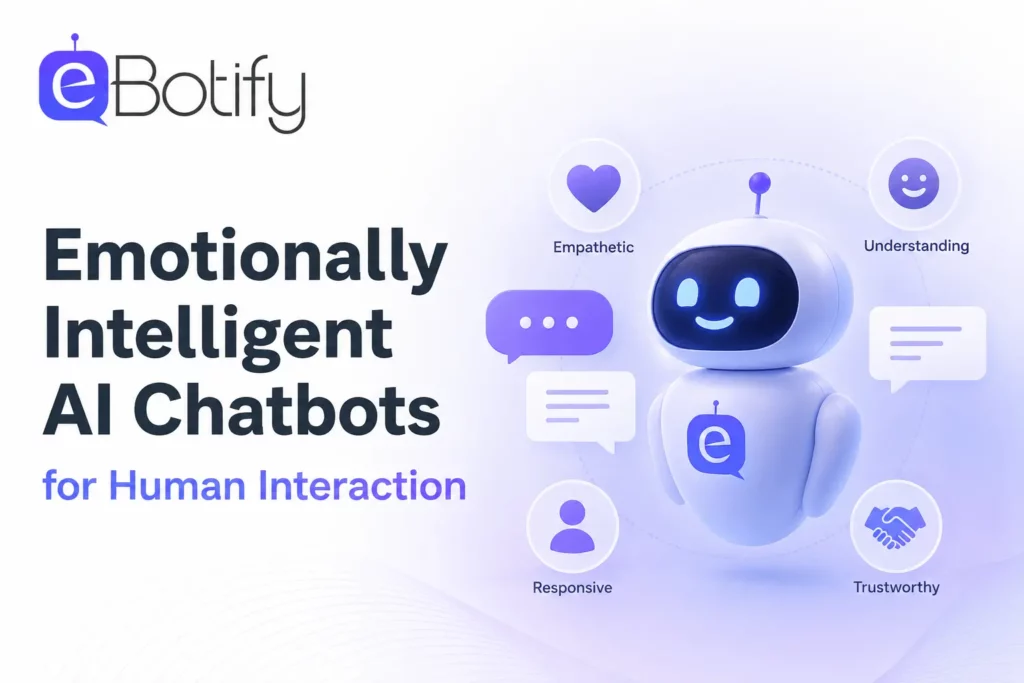
An Emotionally Intelligent Chatbot is an advanced artificial intelligence chatbot that can comprehend human emotions while speaking. Instead of providing simple responses, it recognizes emotions such as happiness, frustration, or grief via text or voice. This allows it to respond in a more compassionate and human-like manner.
For example, if a customer is angry, the chatbot will not only deliver facts but will also demonstrate empathy by using nice words and suggesting helpful alternatives. If someone is joyful, they can answer cheerfully, making the interaction feel more natural. These chatbots are commonly used in customer service, healthcare, and virtual assistants to enhance the user experience. They improve conversations, reduce irritation, and help organizations develop stronger customer connections.
Key Components of Emotionally Intelligent Chatbot
1. Emotion Recognition: Detects customer emotions through text, voice, and conversational tone.
2. Intent Understanding: Identifies user intent behind emotional reactions and responses.
3. Adaptive Responses: Adjusts chatbot tone and communication style during conversations.
4. Personalized Memory: Remembers preferences and past interactions for better support.
5. Smart Escalation: Transfers complex emotional situations smoothly to human agents.
What are the Benefits of Emotional Intelligent Chatbots?
Emotionally intelligent chatbots help businesses create more natural, personalized, and meaningful customer interactions. By understanding customer emotions and responding empathetically, these chatbots improve communication and strengthen customer relationships. They also help businesses deliver faster support while making digital conversations feel more human-like.
1. Stronger Customer Connections
Emotionally intelligent chatbots help businesses build stronger customer relationships through personalized and empathetic conversations. By understanding emotions and responding appropriately, these chatbots make users feel valued and understood. This encourages repeat interactions, trust, and long term customer loyalty.
2. Happier And Satisfied Users
These chatbots improve customer satisfaction by delivering caring and personalized responses during conversations. They can recognize emotions like frustration or happiness and respond in a supportive manner. This creates more positive experiences and strengthens customer trust in the brand.
3. Handling Tough Situations Better
Emotionally intelligent chatbots can manage stressful or sensitive situations with empathy and understanding. They respond calmly to frustrated users and provide thoughtful support instead of generic replies. This improves interaction quality in customer support, healthcare, and other service industries.
4. Smoother And More Natural Interactions
These AI chatbots make conversations feel more human-like and engaging by adapting to customer emotions. They adjust their tone and responses based on the user’s mood and behavior. This creates smoother, more comfortable, and meaningful interactions for users.
5. Faster Service at Lower Costs
Emotionally intelligent chatbots help businesses provide faster customer support while reducing operational costs. They can handle multiple conversations at the same time and deliver accurate responses quickly. This improves efficiency while maintaining high quality customer experiences.
6. Better Customer Retention
Personalized and emotionally aware interactions encourage customers to stay connected with brands longer. When users feel heard and supported, they are more likely to return for future interactions. This helps businesses improve customer retention and loyalty.
7. Improved Brand Image
Businesses using emotionally intelligent chatbots create a more caring and customer-focused brand image. Positive and empathetic interactions leave a lasting impression on users. This helps brands build stronger reputations and customer trust.
8. Increased Customer Engagement
Emotionally intelligent chatbots keep users more engaged through interactive and personalized conversations. They create experiences that feel natural, relevant, and emotionally connected. This leads to higher customer participation and stronger engagement levels.
Drawbacks to Look Out For
1. Cannot provide genuine human emotions or emotional understanding.
2. Users may develop unhealthy emotional dependence on chatbots.
3. Excessive chatbot usage can weaken real world social skills.
4. Personal conversations create serious privacy and data security risks.
5. Chatbots may misunderstand emotions, sarcasm, and cultural communication nuances.
Looking to Transform Customer Interactions with Emotional AI?
Emotionally intelligent chatbots are reshaping digital interactions by making AI-driven conversations more human-like, empathetic, and effective. These chatbots help businesses build stronger customer relationships, improve satisfaction, handle sensitive situations with care, and offer more natural interactions. Additionally, they enhance efficiency, providing faster service while reducing operational costs. As technology advances, emotionally intelligent chatbots will continue to transform industries like customer service, healthcare, and e-commerce, making digital communication more intuitive and user-friendly.
At eBotify, we specialize in developing cutting-edge chatbot solutions that seamlessly integrate with CRM systems to enhance customer interactions and support processes. Our AI-powered chatbots are designed to deliver personalized, round-the-clock assistance, ensuring a smoother and more engaging experience for users. Whether it’s improving customer satisfaction or optimizing operational efficiency, eBotify helps businesses unlock the full potential of chatbot technology.
Get in touch with us today to learn more!
Frequently Asked Questions
1. Are emotionally intelligent chatbots actually detecting real emotions or just guessing based on keywords?
It goes beyond simple keyword matching. These chatbots analyze tone, sentence structure, and context to understand emotional intent. The more interactions they process, the better they get at reading between the lines and responding appropriately.
2. Can a chatbot really handle a genuinely upset or distressed customer without making things worse?
Yes, when built correctly. Emotionally intelligent chatbots are trained to respond with calm, empathetic language during tense situations. They acknowledge frustration rather than ignoring it, which often de-escalates the situation before it requires human intervention.
3. How are emotionally intelligent chatbots different from the regular chatbots businesses have been using for years?
Regular chatbots follow fixed scripts and give identical responses regardless of how someone feels. Emotionally intelligent ones adapt their tone and messaging based on the user’s emotional state, making the conversation feel far more human and considerate.
4. In which industries do emotionally intelligent chatbots make the biggest real-world difference for customers?
Healthcare, mental health support, and customer service see the most impact. These are spaces where how something is said matters just as much as what is said, and emotional awareness can genuinely change the quality of someone’s experience.
5. Does using emotionally intelligent chatbots mean businesses no longer need human support agents at all?
Not exactly. These chatbots handle a large volume of conversations efficiently, but complex or deeply sensitive situations still benefit from human judgment. The goal is to complement human agents, not replace them, creating a smarter support system overall.