

Key Takeaways
- Lead generation chatbots engage visitors and capture enquiries through interactive conversations.
- Relevant qualification questions help identify prospects with genuine purchasing interest.
- Automated lead scoring helps sales teams prioritize promising business opportunities.
- CRM integration keeps lead information organized and simplifies sales follow-ups.
- Regular performance tracking helps improve chatbot effectiveness and lead quality.
Website traffic creates opportunities, but turning visitors into qualified sales prospects remains a challenge for many businesses. Potential customers may leave without submitting a contact form, finding the information they need, or connecting with the sales team. This gap makes it difficult to identify genuine buying interest and respond at the right time.
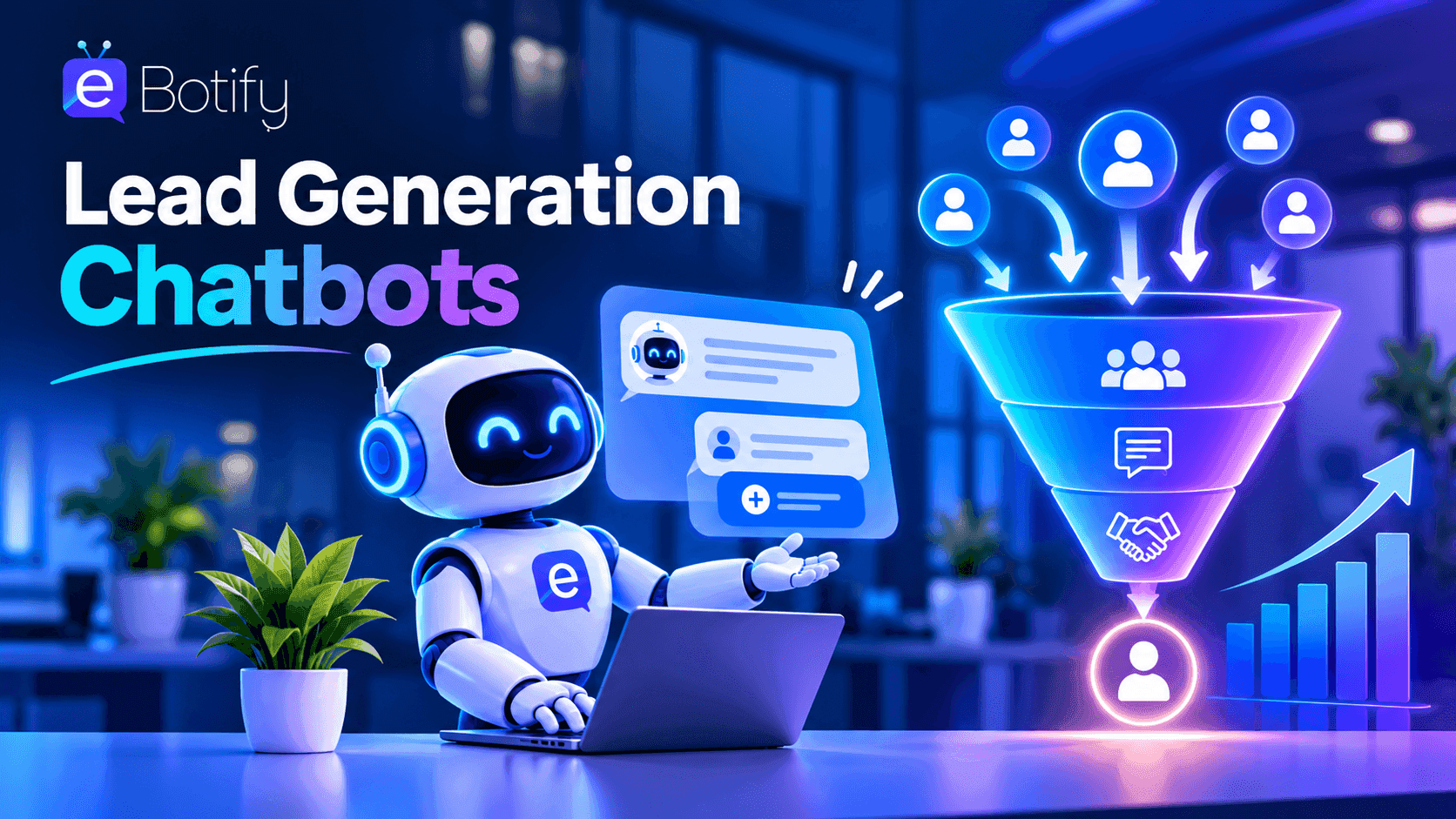
A lead generation chatbot helps address this challenge by engaging visitors, asking relevant questions, and collecting useful information through automated conversations. With well-planned qualification questions and routing rules, businesses can identify promising prospects and direct them to the right sales representatives. This blog explores how chatbots capture, qualify, score, and manage leads more effectively.
What Is a Lead Generation Chatbot and How Does It Work?
A lead generation chatbot is an automated conversational tool that engages potential customers, answers initial queries, and collects information about their needs. Unlike traditional contact forms that rely on visitors submitting details, chatbots guide users through interactive conversations. They can also offer more structured engagement than basic live chat by following predefined questions and qualification steps.
A chatbot for lead generation can operate through rule-based flows or AI-powered responses. Rule-based chatbots follow predefined paths, while AI-powered chatbots can interpret natural language and respond according to the conversation context. Businesses can deploy them across websites, WhatsApp, and social media platforms to capture enquiries, understand customer requirements, and direct relevant prospects towards the sales team.
Why Businesses Are Using Chatbots Instead of Traditional Lead Forms?
Traditional lead forms often depend on visitors taking the initiative to share their contact details. Chatbots make this process more interactive by engaging visitors while they explore a product or service. This creates an opportunity to address initial questions and understand their requirements before they leave the website.
Four practical advantages make chatbots useful for lead generation:
- Immediate Engagement: Respond to visitor queries instantly and capture interest while potential customers are actively exploring.
- Simplified Lead Capture: Collect essential details through short conversations instead of lengthy forms.
- Round-the-Clock Availability: Engage visitors outside business hours without requiring sales representatives to remain available.
- Consistent Lead Qualification: Follow predefined questions and criteria to collect relevant information across incoming enquiries.
These capabilities help businesses manage enquiries systematically, reduce manual data collection, and give sales teams better context for follow-ups.
How a Lead Qualification Chatbot Qualifies Leads Automatically?
A lead qualification chatbot follows a structured process to identify potential customers and understand their readiness to purchase. The process generally involves five stages:
1. Visitor Engagement: The chatbot initiates conversations through welcome messages, relevant prompts, or specific visitor actions.
2. Information Collection: It gathers essential details, including the visitor's name, email, company, and requirements.
3. Lead Qualification: It asks relevant questions about budget, business needs, decision-making authority, and purchase timelines.
4. Lead Scoring: Based on predefined criteria, the chatbot assigns scores to responses to help identify high-intent prospects.
5. Lead Routing: Qualified leads are directed to the appropriate sales representative or CRM workflow for follow-up.
For example: A visitor enquiring about enterprise chatbot development confirms their budget, requirements, and intention to implement within the next month. The chatbot records these responses, assigns a higher lead score, and notifies the relevant sales representative.
This structured approach helps sales teams prioritize promising enquiries and spend less time manually reviewing incoming leads.
How to Design Chatbot Questions That Identify High-Quality Leads?
The quality of leads a chatbot identifies depends largely on the questions it asks. Businesses should design qualification conversations around their target audience, sales process, and typical customer requirements. The following areas can help structure these conversations:
- Understand Buyer Requirements: Ask which product, service, or business challenge the visitor wants to address.
- Identify Decision-Making Authority: Determine whether the visitor makes purchasing decisions or influences them.
- Determine Budget Readiness: Ask about the expected investment range when relevant to the offering.
- Understand Purchase Timeline: Identify visitors planning immediate purchases and those still researching options.
- Use Conditional Questions: Adjust follow-up questions based on previous responses to keep conversations relevant.
- Keep Conversations Short: Prioritize essential questions and collect additional details when necessary.
Example of a chatbot qualification conversation:
Chatbot: What type of service are you looking for?
Visitor: Enterprise customer support automation.
Chatbot: Are you planning to implement it within the next three months?
Visitor: Yes.
Chatbot: Would you like to discuss your requirements with our team?
Businesses can use the BANT framework (Budget, Authority, Need, and Timeline) as a starting point when designing qualification questions. However, the questions should reflect their actual sales process, target customers, and purchasing requirements. This helps make conversations relevant without overwhelming potential customers.
Lead Scoring and CRM Integration: Turning Conversations into Sales Opportunities
Lead scoring helps businesses prioritize prospects based on their likelihood of becoming customers. A sales chatbot can assign scores using factors such as purchase intent, budget, business requirements, and expected purchase timeline. Based on these scores, leads can be categorized into three groups:
- High-Intent Leads: Visitors with clear requirements, suitable budgets, and immediate purchasing plans.
- Medium-Intent Leads: Prospects interested in the offering but still evaluating their options.
- Low-Intent Leads: Visitors who are primarily researching or have not established clear requirements.
CRM integrations with platforms such as HubSpot, Salesforce, and Pipedrive help transfer collected details, conversation history, and lead scores automatically. Sales teams can receive notifications, assign leads, and continue conversations with relevant context. Businesses should regularly review scoring criteria against actual sales outcomes to maintain accurate lead prioritization and improve follow-up coordination.
How to Measure the Performance of Your Lead Generation Chatbot?
Measuring chatbot performance helps businesses understand how effectively conversations contribute to sales opportunities. Instead of focusing only on the number of interactions, businesses should track meaningful indicators:
1. Lead Capture Rate: Percentage of chatbot interactions that generate contactable leads.
2. Lead Qualification Rate: Percentage of captured leads meeting predefined qualification criteria.
3. Chat-to-Meeting Conversion: Number of conversations resulting in booked sales meetings.
4. Lead Response Time: Time taken by sales representatives to follow up with qualified prospects.
5. Cost Per Qualified Lead: Total chatbot-related acquisition costs divided by qualified leads generated.
These metrics provide a clearer picture of chatbot marketing performance and help identify areas that need improvement. Tracking qualified leads, meeting bookings, and sales outcomes helps businesses evaluate the actual contribution of chatbot conversations to their sales pipeline.
Common Mistakes to Avoid When Implementing Lead Generation Chatbots
Poor chatbot implementation can affect visitor experience and lead quality. Businesses should avoid these common mistakes:
1. Asking Too Many Questions: Prioritize essential questions and collect additional details gradually.
2. Using Generic Conversations: Customize chatbot messages according to visitor needs and business offerings.
3. Unclear Lead Scoring: Establish measurable qualification criteria before assigning lead scores.
4. Ignoring CRM Integration: Connect chatbot conversations with CRM platforms to maintain organized lead records.
5. Missing Human Follow-Ups: Provide sales assistance for complex enquiries and high-intent prospects.
Businesses should also obtain appropriate user consent, communicate data collection practices clearly, and protect visitor information through secure data handling. These practices help build trust and support a more reliable lead generation process.
Looking to improve your lead generation process?
A well-designed lead generation chatbot helps businesses engage website visitors, collect relevant information, and identify promising sales opportunities through automated conversations. With effective qualification questions, lead scoring, and CRM integration, businesses can improve lead management and help sales teams focus on prospects with genuine buying interest. Tracking performance and maintaining human support also contribute to a more effective lead generation process.
At eBotify, we offer custom chatbot development to help businesses streamline customer interactions, capture enquiries, and automate lead qualification across multiple channels. Our chatbot development services support business goals through tailored conversational experiences and integration capabilities. Partner with eBotify to build a chatbot that supports your sales and customer engagement efforts.